
AdaExplore: Failure-Driven Adaptation and Diversity-Preserving Search for Efficient Kernel Generation
arXiv cs.CL / 4/21/2026
📰 NewsModels & Research
Key Points
- AdaExplore is a new agent framework for efficient kernel code generation that leverages accumulated execution feedback for self-improvement at test time.
- It combines failure-driven adaptation—turning recurring execution failures into reusable validity rules—with diversity-preserving search to maintain feasibility while optimizing performance.
- The framework avoids treating each instance independently by using a memory of validity constraints derived from failures, reducing unreliable “naive generation + local refinement,” especially for constrained DSLs like Triton.
- AdaExplore performs tree-based exploration that alternates between small local refinements and larger structural regeneration, improving search coverage beyond local optima.
- Experiments on kernel runtime optimization benchmarks show substantial runtime speedups (3.12x on KernelBench Level-2 and 1.72x on Level-3) within 100 steps, with continued gains given more computation.
Related Articles
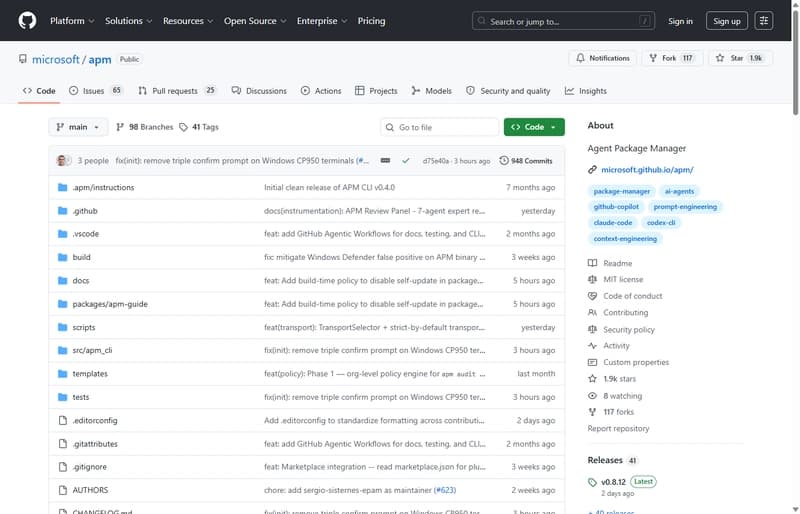
Agent Package Manager (APM): A DevOps Guide to Reproducible AI Agents
Dev.to

3 Things I Learned Benchmarking Claude, GPT-4o, and Gemini on Real Dev Work
Dev.to
Open Source Contributors Needed for Skillware & Rooms (AI/ML/Python)
Dev.to
Production LLM systematically violates tool schema constraints to invent UI features; observed over ~2,400 messages [D]
Reddit r/MachineLearning
My AI system kept randomly switching to French mid-answer and it took me way too long to figure out why
Reddit r/artificial


