
Scalable Identification and Prioritization of Requisition-Specific Personal Competencies Using Large Language Models
arXiv cs.LG / 4/2/2026
💬 OpinionSignals & Early TrendsIdeas & Deep AnalysisModels & Research
Key Points
- The paper argues that current AI recruitment systems often miss requisition-specific personal competencies (PCs) that go beyond generic job categories.
- It proposes an LLM-based method that combines dynamic few-shot prompting, reflection-driven self-improvement, similarity filtering, and multi-stage validation to extract and rank req-specific PCs.
- Evaluated on Program Manager requisitions, the approach achieves an average accuracy of 0.76 for identifying the highest-priority req-specific PCs, nearing human expert inter-rater reliability.
- The method also keeps an out-of-scope rate low (0.07), suggesting it can avoid selecting irrelevant competencies when prompts or data are mismatched.
- The overall contribution is a more scalable workflow for deriving fine-grained competency signals from requisitions, potentially improving how recruiters and HR teams operationalize candidate evaluation criteria.
💡 Insights using this article
This article is featured in our daily AI news digest — key takeaways and action items at a glance.
Related Articles

Black Hat Asia
AI Business
v5.5.0
Transformers(HuggingFace)Releases
Bonsai (PrismML's 1 bit version of Qwen3 8B 4B 1.7B) was not an aprils fools joke
Reddit r/LocalLLaMA

Big Tech firms are accelerating AI investments and integration, while regulators and companies focus on safety and responsible adoption.
Dev.to
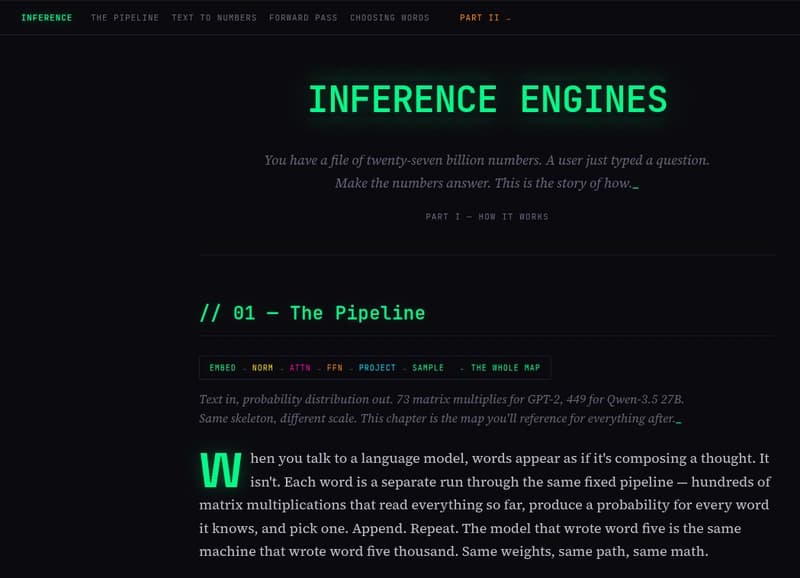
Inference Engines - A visual deep dive into the layers of an LLM
Dev.to


