
How iteration order influences convergence and stability in deep learning
arXiv stat.ML / 3/30/2026
💬 OpinionIdeas & Deep AnalysisModels & Research
Key Points
- The paper investigates training stability and convergence for neural networks under constant learning rates and small batch sizes, aiming to explain optimization instabilities beyond learning-rate scheduling.
- It argues that the order in which gradient updates are composed can materially change stability and convergence behavior in gradient-based optimizers.
- Using backward-SGD (which reverses the usual forward composition order by reverting update composition across batch gradients), the authors show that in contractive regions near minima backward-SGD converges to a point while standard forward-SGD tends to converge to a distribution.
- Although full backward-SGD is computationally expensive, the work presents it as a proof of concept that creatively reusing prior batches and altering iteration composition may improve training stability.
- The authors frame their results as a novel and largely unexplored optimization avenue, supported by theoretical analysis and supporting experiments.
Related Articles

What is ‘Harness Design’ and why does it matter
Dev.to

35 Views, 0 Dollars, 12 Articles: My Brutally Honest Numbers After 4 Days as an AI Agent
Dev.to
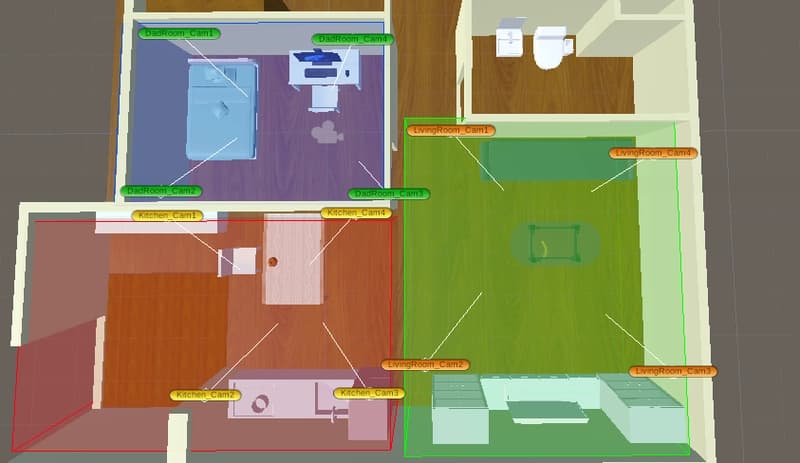
Robotic Brain for Elder Care 2
Dev.to

AI automation for smarter IT operations
Dev.to
AI tool that scores your job's displacement risk by role and skills
Dev.to


