
TexOCR: Advancing Document OCR Models for Compilable Page-to-LaTeX Reconstruction
arXiv cs.CL / 4/28/2026
📰 NewsDeveloper Stack & InfrastructureModels & Research
Key Points
- The paper introduces TexOCR, a document OCR approach focused on reconstructing scientific PDFs into compilable LaTeX rather than extracting only plain text or Markdown.
- It contributes TexOCR-Bench, a benchmark with multi-dimensional evaluation for transcription accuracy, structural fidelity, and end-to-end LaTeX compilability.
- It also releases TexOCR-Train, a large-scale training corpus used to train a 2B-parameter TexOCR model via supervised fine-tuning and reinforcement learning.
- The reinforcement learning component uses verifiable rewards from LaTeX unit tests to enforce compilability and referential integrity, improving results over SFT alone.
- Experiments across 21 frontier models show many existing systems break important document invariants (section consistency, float placement, and label-reference links), limiting downstream reliability.
Related Articles
LLMs will be a commodity
Reddit r/artificial

What it feels like to have to have Qwen 3.6 or Gemma 4 running locally
Reddit r/LocalLLaMA
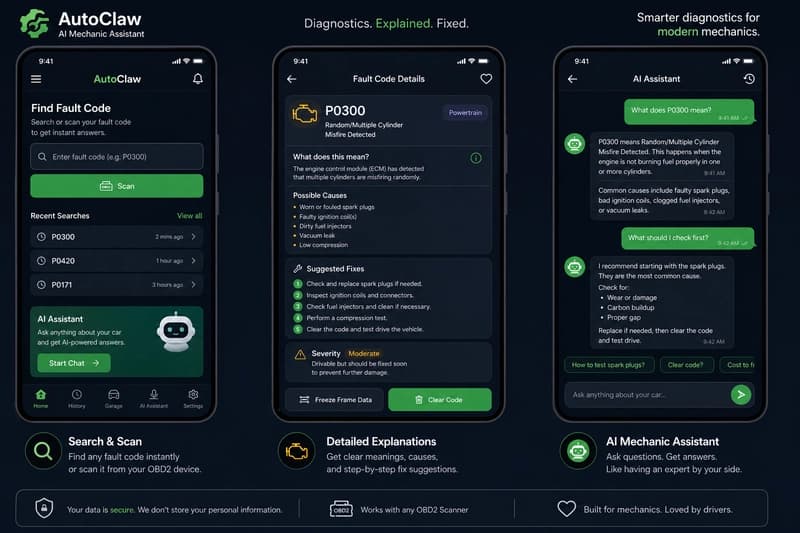
From Fault Codes to Smart Fixes: How Google Cloud NEXT ’26 Inspired My AI Mechanic Assistant
Dev.to

Dex lands $5.3M to grow its AI-driven talent matching platform
Tech.eu

7 OpenClaw Money-Making Cases in One Week — and the Hidden Cost Problem Behind Them
Dev.to


