
IDIOLEX: Unified and Continuous Representations for Idiolectal and Stylistic Variation
arXiv cs.CL / 4/7/2026
💬 OpinionSignals & Early TrendsIdeas & Deep AnalysisModels & Research
Key Points
- The paper argues that existing sentence embeddings often focus on meaning and not on how a sentence is expressed, motivating representations that capture style and dialect separately from semantic content.
- It introduces IDIOLEX, a training framework that uses sentence provenance supervision plus linguistic features to learn continuous idiolectal (individual/community) style and dialect representations.
- Experiments on Arabic and Spanish dialect data show that the learned representations capture meaningful variation and can transfer across domains for analysis and classification tasks.
- The authors also test using these representations as objectives for stylistic alignment in language models, aiming to support more style-sensitive and accessible LLM behavior.
- Overall, the work emphasizes jointly modeling individual and community-level variation to improve downstream sensitivity to stylistic differences.
Related Articles

Black Hat Asia
AI Business
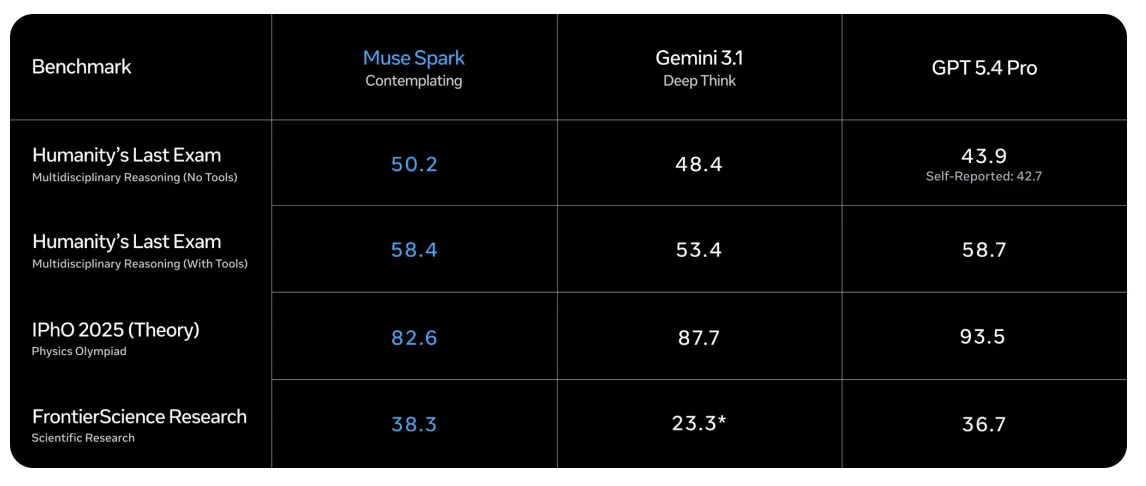
Meta Superintelligence Lab Releases Muse Spark: A Multimodal Reasoning Model With Thought Compression and Parallel Agents
MarkTechPost

Chatbots are great at manipulating people to buy stuff, Princeton boffins find
The Register
I tested and ranked every ai companion app I tried and here's my honest breakdown
Reddit r/artificial

Big Tech firms are accelerating AI investments and integration, while regulators and companies focus on safety and responsible adoption.
Dev.to


