
 | TL;DR:DMax cleverly mitigates error accumulation by reforming decoding as a progressive self-refinement process, allowing the model to correct its own erroneous predictions during generation. Abstract:
Layman's Explanation:The core idea is that diffusion language models should be able to generate text faster than normal LLMs because they can fill in multiple tokens at the same time. In practice, though, that speed advantage gets limited because early wrong guesses tend to snowball. Once the model commits to a bad token, that bad token becomes part of the context for the next step, so quality can fall apart fast when decoding gets too aggressive. What DMax does is give the model a better way to recover from its own mistakes. Instead of moving in a rigid one-way path from masked slots to final tokens, it lets the model keep refining intermediate guesses before locking them in. The paper’s two main ideas are pretty intuitive. First, the model is trained on its own imperfect predictions, so it learns how to clean up the kinds of errors it will actually make at inference time. Second, during decoding it uses a softer in-between representation rather than treating every guess as fully final right away, which helps preserve uncertainty and makes revision easier. The result is that DMax pushes much more parallel decoding without the usual collapse in quality. On the paper’s math and coding benchmarks, it gets large speedups while keeping accuracy close to the original model, and in some lower-parallel settings it even improves accuracy a bit. So the main takeaway is not just “faster diffusion LLMs,” but diffusion LLMs that can revise themselves well enough to make aggressive parallel decoding actually practical. Link to the Paper: https://arxiv.org/pdf/2604.08302Link to the GitHub: https://github.com/czg1225/DMaxLink to the Models: https://huggingface.co/collections/Zigeng/dmax-modelsLink to the Training Dataset: https://huggingface.co/collections/Zigeng/dmax-training-data[link] [comments] |
National University of Singapore Presents "DMax": A New Paradigm For Diffusion Language Models (dLLMs) Enabling Aggressive Parallel Decoding.
Reddit r/LocalLLaMA / 4/11/2026
💬 OpinionDeveloper Stack & InfrastructureIdeas & Deep AnalysisModels & Research
Key Points
- DMax is a new diffusion language model decoding paradigm from National University of Singapore that mitigates error accumulation during highly parallel generation by reframing decoding as progressive self-refinement.
- Instead of conventional masked token decoding, DMax reformulates the process as refinement from mask embeddings toward token embeddings, enabling the model to correct erroneous predictions mid-generation.
- The approach introduces On-Policy Uniform Training to unify masked and uniform dLLM behaviors so the model learns to recover clean tokens from both masked inputs and its own mistakes.
- It also proposes Soft Parallel Decoding, representing intermediate states as interpolation in embedding space to support iterative self-revising while keeping parallelism.
- Experiments reportedly show substantial gains in benchmarks (e.g., higher TPF on GSM8K and MBPP) while preserving comparable quality, with measured throughput of ~1,338 TPS on two H200 GPUs at batch size 1.
💡 Insights using this article
This article is featured in our daily AI news digest — key takeaways and action items at a glance.
Related Articles
i'm amazed how happily blind everyone seems to be
Reddit r/artificial
Building a Plugin Marketplace for AI-Native Workflows
Dev.to
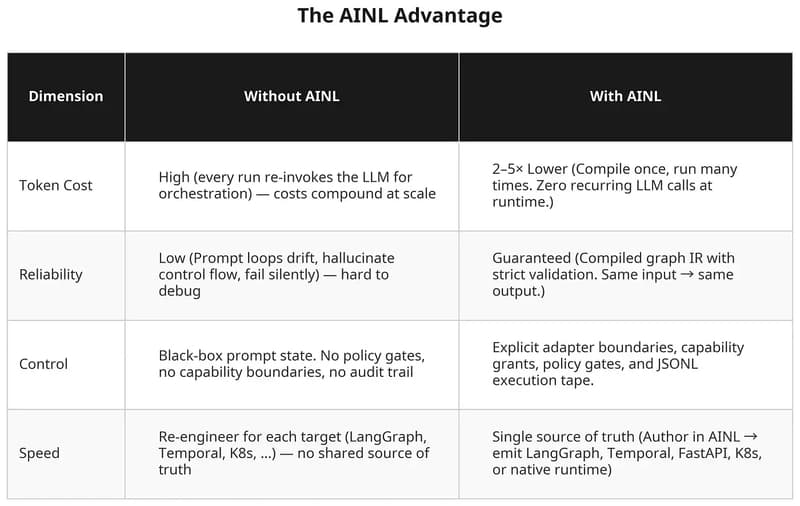
Why Your AI Agents are Burning Cash (And How to Fix It in 3 Minutes)
Dev.to
v0.20.6-rc0: gemma4: update renderer to match new jinja template (#15490)
Ollama Releases

From AI Draft to Client-Ready: Your CMA Quality Control System
Dev.to


