
End-to-end data-driven prediction of urban airflow and pollutant dispersion
arXiv cs.LG / 3/19/2026
📰 NewsIdeas & Deep AnalysisModels & Research
Key Points
- The study proposes an end-to-end data-driven framework to predict urban airflow and pollutant dispersion in a street canyon using LES data as the database.
- It first obtains a reduced basis via spectral proper orthogonal decomposition (SPOD) and projects time-series data onto SPOD modes to derive temporal coefficients.
- A nonlinear compression of temporal coefficients is performed with an autoencoder to further reduce dimensionality.
- A reduced-order model is learned in the latent space with Long Short-Term Memory (LSTM) networks, and pollutant dispersion is estimated from predicted velocity fields through a convolutional neural network.
- The results demonstrate the framework's ability to predict instantaneous and statistically stationary fields over long time horizons, enabling data-driven decision-making for mitigation.
Related Articles
Day 10: 230 Sessions of Hustle and It Comes Down to One Person Reading a Document
Dev.to

5 Dangerous Lies Behind Viral AI Coding Demos That Break in Production
Dev.to
Two bots, one confused server: what Nimbus revealed about AI agent identity
Dev.to
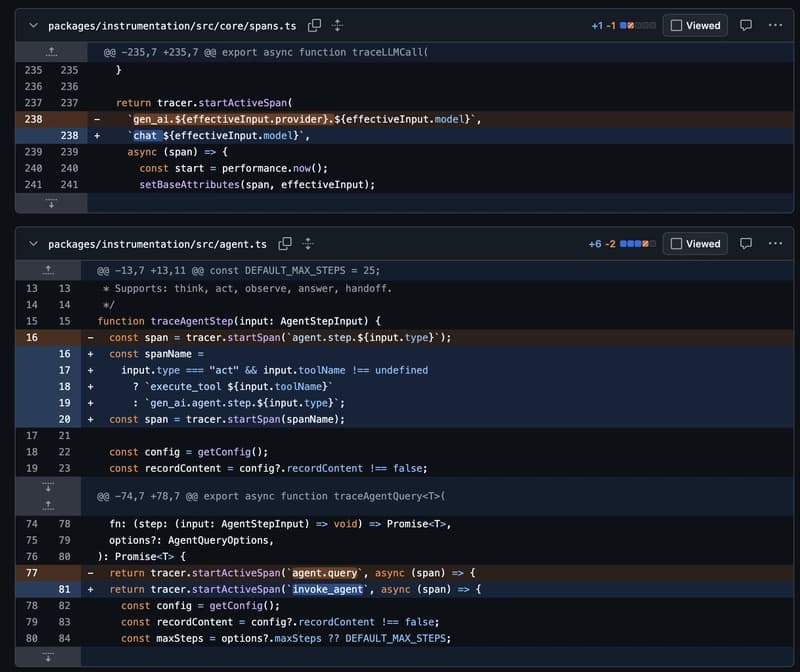
OpenTelemetry just standardized LLM tracing. Here's what it actually looks like in code.
Dev.to
PIXIU: A Large Language Model, Instruction Data and Evaluation Benchmark forFinance
Dev.to


