
Open-Architecture End-to-End System for Real-World Autonomous Robot Navigation
arXiv cs.RO / 4/23/2026
💬 OpinionDeveloper Stack & InfrastructureModels & Research
Key Points
- The paper introduces a lightweight, open-architecture end-to-end system that enables real robots to autonomously navigate unknown, complex, and dynamic environments by addressing perception errors, localization uncertainty, and safety constraints.
- The system runs on a Unitree Go2 quadruped and uses ROS 2 to integrate onboard components that fuse sensory data for localization/mapping with open-vocabulary semantics.
- It builds continuously updated hierarchical scene graphs from an evolving semantic object map, and an LLM-based planner uses these graphs to generate and adapt multi-step plans in real time.
- Experiments in multiple indoor environments show zero-shot real-world navigation performance exceeding 88% task success, along with analysis of behavior during deployment.
Related Articles

Trajectory Forecasts in Unknown Environments Conditioned on Grid-Based Plans
Dev.to
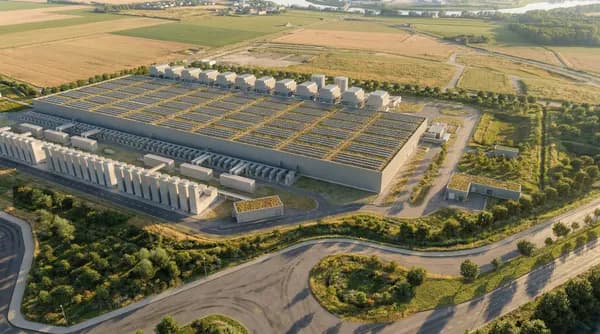
Elevating Austria: Google invests in its first data center in the Alps.
Google Blog
OpenAI Just Named It Workspace Agents. We Open-Sourced Our Lark Version Six Months Ago
Dev.to

GPT Image 2 Subject-Lock Editing: A Practical Guide to input_fidelity
Dev.to
AI Tutor That Works Offline — Study Anywhere with EaseLearn AI
Dev.to


