
GUI Agents with Reinforcement Learning: Toward Digital Inhabitants
arXiv cs.AI / 5/1/2026
📰 NewsSignals & Early TrendsIdeas & Deep AnalysisModels & Research
Key Points
- The paper argues that GUI agents need reinforcement learning (RL) rather than only supervised fine-tuning to cope with long-horizon credit assignment, distribution shifts, and safe exploration in irreversible environments.
- It provides a comprehensive overview of RL-for-GUI-agent research and organizes methods into Offline RL, Online RL, and Hybrid strategies, alongside discussion of reward engineering and data efficiency.
- Key trends identified include composite, multi-tier reward architectures to balance reliability and scalability, and a move toward world-model-based training driven by GUI I/O latency bottlenecks.
- The authors also suggest that “System-2”-like deliberation may emerge spontaneously from rich reward signals, potentially reducing the need for explicit reasoning supervision.
- The work concludes with a roadmap spanning process rewards, continual RL, cognitive architectures, and safe deployment to enable more robust, agent-native GUI automation (“digital inhabitants”).
Related Articles
Every handle invocation on BizNode gets a WFID — a universal transaction reference for accountability. Full audit trail,...
Dev.to
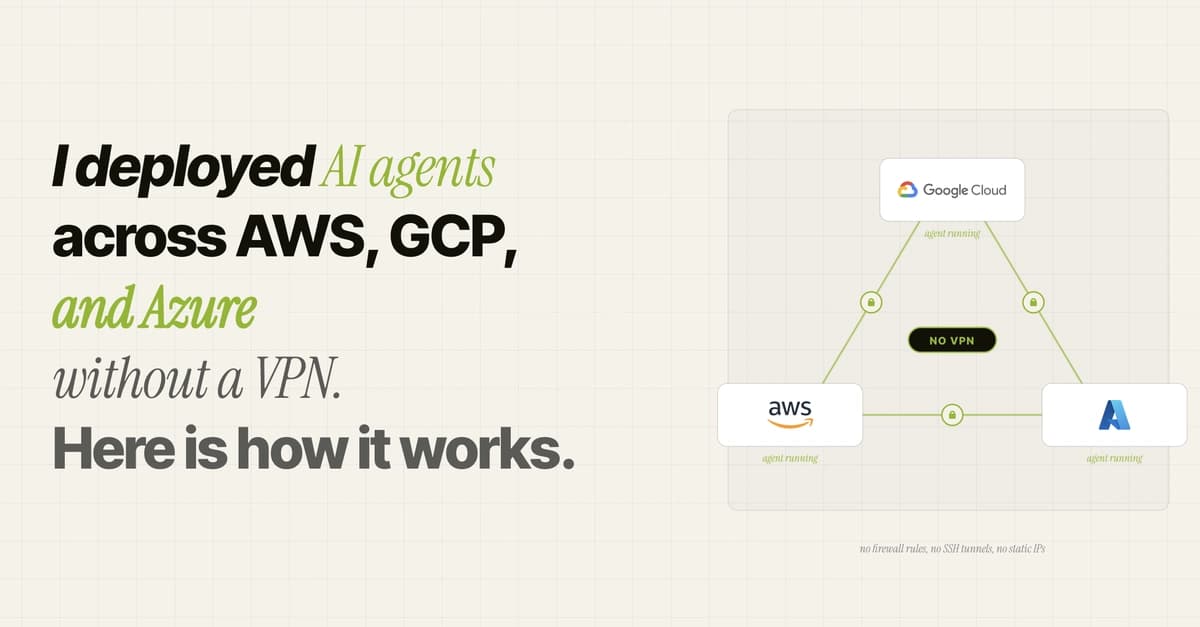
I deployed AI agents across AWS, GCP, and Azure without a VPN. Here is how it works.
Dev.to

Panduan Lengkap TestSprite MCP Server — Dokumentasi Getting Started dalam Bahasa Indonesia
Dev.to

AI made learning fun again
Dev.to

Every Telegram conversation becomes a qualified lead. BizNode captures name, email, and business details automatically while...
Dev.to


