
PrivEraserVerify: Efficient, Private, and Verifiable Federated Unlearning
arXiv cs.LG / 4/15/2026
💬 OpinionIdeas & Deep AnalysisModels & Research
Key Points
- PrivEraserVerify (PEV) proposes a unified federated unlearning framework that targets three needs simultaneously: efficiency, privacy, and verifiability for the right to be forgotten (RTBF).
- The approach combines adaptive checkpointing for faster reconstruction, layer-adaptive differential privacy calibration to remove a departing client’s influence with less accuracy loss, and fingerprint-based verification to enable decentralized, noninvasive confirmation of unlearning.
- Experiments across image, handwritten character, and medical datasets indicate unlearning can be 2–3× faster than full retraining while maintaining formal indistinguishability guarantees and reduced performance degradation.
- The authors claim PEV is the first framework to jointly provide efficiency, privacy, and verifiability for federated unlearning, aiming to make federated learning more practical and regulation-compliant for deployment.
💡 Insights using this article
This article is featured in our daily AI news digest — key takeaways and action items at a glance.
Related Articles
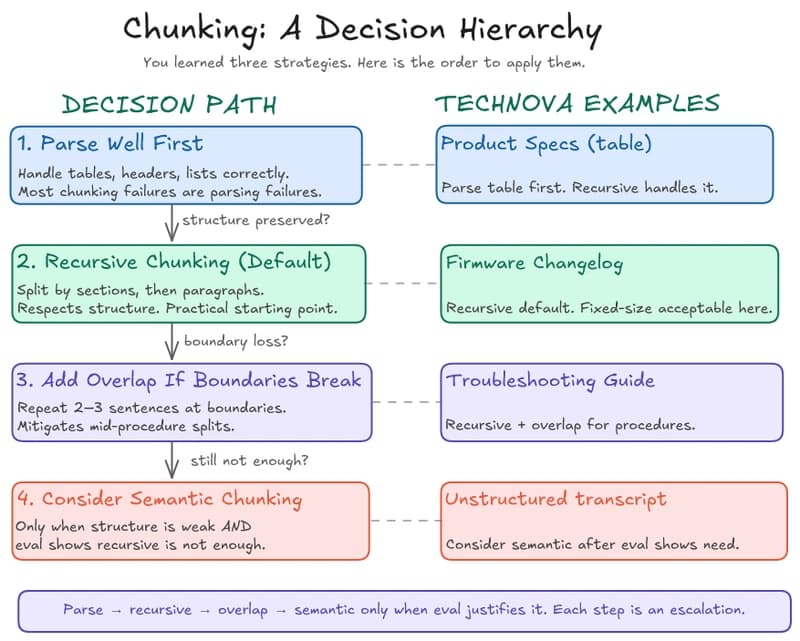
RAG in Practice — Part 4: Chunking, Retrieval, and the Decisions That Break RAG
Dev.to
Why dynamically routing multi-timescale advantages in PPO causes policy collapse (and a simple decoupled fix) [R]
Reddit r/MachineLearning

How AI Interview Assistants Are Changing Job Preparation in 2026
Dev.to

Consciousness in Artificial Intelligence: Insights from the Science ofConsciousness
Dev.to

NEW PROMPT INJECTION
Dev.to


