
Beyond Local vs. External: A Game-Theoretic Framework for Trustworthy Knowledge Acquisition
arXiv cs.CL / 4/28/2026
📰 NewsIdeas & Deep AnalysisModels & Research
Key Points
- The paper highlights a core trade-off in cloud LLM use: external querying can improve reasoning and knowledge quality but may expose sensitive user intent, while local-only models protect privacy at the cost of quality.
- It proposes GTKA (Game-theoretic Trustworthy Knowledge Acquisition), a framework that models knowledge utility vs. privacy as a strategic game.
- GTKA uses three components: a privacy-aware sub-query generator that splits intent into low-risk fragments, an adversarial reconstruction attacker that estimates how much original intent can be recovered, and a trusted local integrator that securely combines external answers.
- By training the generator and attacker in an alternating adversarial process, GTKA learns a sub-query policy that increases answer accuracy while reducing the reconstructability of sensitive intent.
- Experiments on biomedical and legal benchmarks show GTKA substantially lowers intent leakage versus prior methods while preserving high-quality, high-fidelity answers.
Related Articles

Big Tech firms are accelerating AI investments and integration, while regulators and companies focus on safety and responsible adoption.
Dev.to
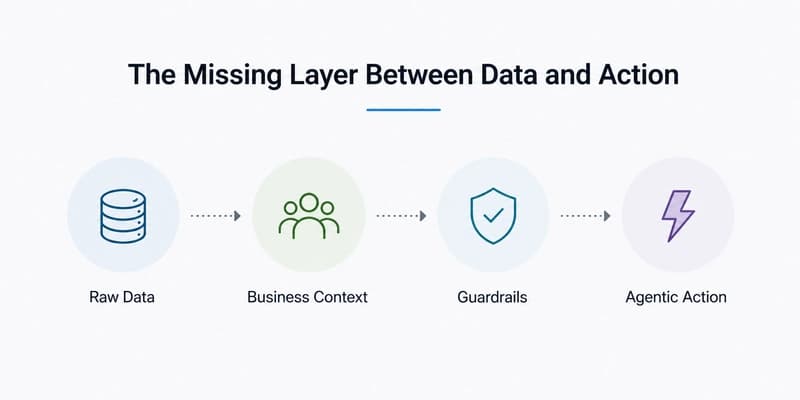
Everyone Wants AI Agents. Fewer Teams Are Ready for the Messy Business Context Behind Them
Dev.to
AI 编程工具对比 2026:Claude Code vs Cursor vs Gemini CLI vs Codex
Dev.to

How I Improved My YouTube Shorts and Podcast Audio Workflow with AI Tools
Dev.to

An improvement of the convergence proof of the ADAM-Optimizer
Dev.to


