
Motion-Adaptive Temporal Attention for Lightweight Video Generation with Stable Diffusion
arXiv cs.CV / 3/19/2026
📰 NewsIdeas & Deep AnalysisModels & Research
Key Points
- It presents a motion-adaptive temporal attention mechanism for parameter-efficient video generation built upon frozen Stable Diffusion models.
- The method dynamically adjusts temporal attention receptive fields based on estimated motion content: high-motion sequences attend locally to preserve detail, while low-motion sequences attend globally to maintain scene consistency.
- It injects lightweight temporal attention modules into all UNet transformer blocks via a cascaded strategy—global attention in down-sampling and middle blocks for semantic stabilization, and motion-adaptive attention in up-sampling blocks for fine-grained refinement.
- The approach adds only 25.8M trainable parameters (about 2.9% of the base UNet) and achieves competitive results on WebVid when trained on 100K videos.
- It shows that the standard denoising objective provides sufficient implicit temporal regularization, outperforming explicit temporal-consistency losses, with ablations highlighting a trade-off between noise correlation and motion amplitude that enables inference-time control.
Related Articles
Day 10: 230 Sessions of Hustle and It Comes Down to One Person Reading a Document
Dev.to

5 Dangerous Lies Behind Viral AI Coding Demos That Break in Production
Dev.to
Two bots, one confused server: what Nimbus revealed about AI agent identity
Dev.to
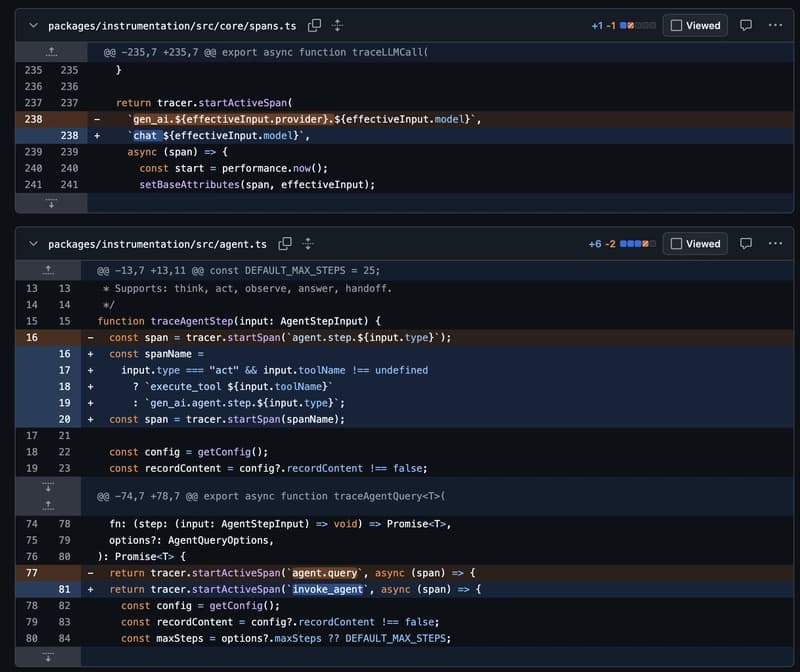
OpenTelemetry just standardized LLM tracing. Here's what it actually looks like in code.
Dev.to
PIXIU: A Large Language Model, Instruction Data and Evaluation Benchmark forFinance
Dev.to


