
An End-to-End Framework for Building Large Language Models for Software Operations
arXiv cs.LG / 5/6/2026
📰 NewsDeveloper Stack & InfrastructureModels & Research
Key Points
- The paper introduces OpsLLM, a domain-specific LLM designed for software operations, supporting both knowledge-based question answering (QA) and root cause analysis (RCA).
- It proposes a full end-to-end workflow for building LLMs for this domain, including Human-in-the-Loop data curation and creation of a fine-tuning dataset from operational raw data.
- The model is trained in stages: supervised fine-tuning to form a base model, followed by reinforcement learning enhanced with a domain process reward model (DPRM) to improve RCA accuracy and reliability.
- Experiments across RCA and QA tasks of varying difficulty show OpsLLM delivers higher performance than existing open-source and closed-source LLMs, with reported gains up to 5.7% for QA and up to 70.3% for RCA.
- The authors plan to open-source three OpsLLM variants (7B/14B/32B) along with a 15K fine-tuning dataset to enable further research and adoption.
Related Articles

SIFS (SIFS Is Fast Search) - local code search for coding agents
Dev.to
BizNode's semantic memory (Qdrant) makes your bot smarter over time — it remembers past conversations and answers...
Dev.to
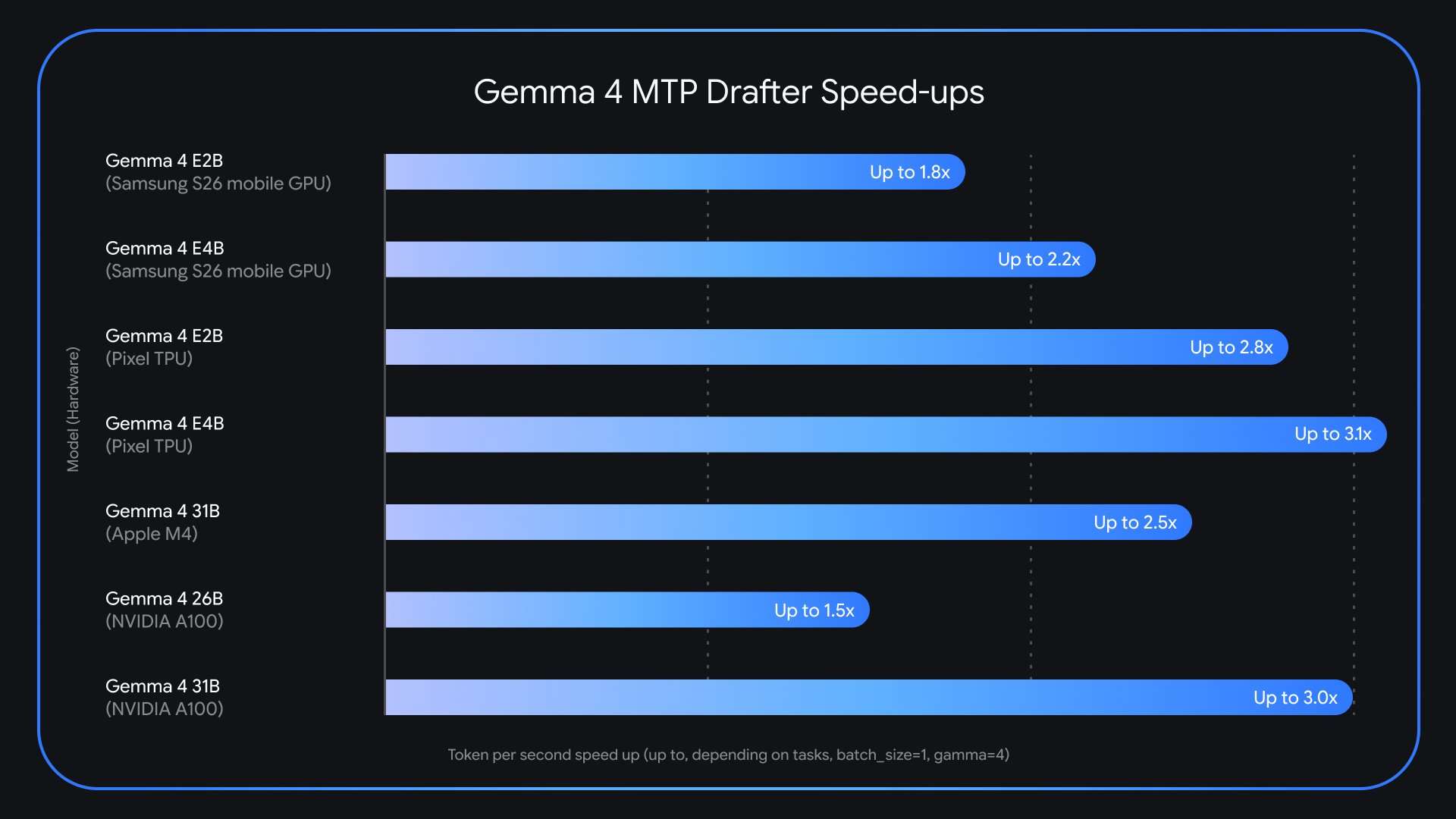
Google AI Releases Multi-Token Prediction (MTP) Drafters for Gemma 4: Delivering Up to 3x Faster Inference Without Quality Loss
MarkTechPost
Solidity LM surpasses Opus
Reddit r/LocalLLaMA

Quality comparison between Qwen 3.6 27B quantizations (BF16, Q8_0, Q6_K, Q5_K_XL, Q4_K_XL, IQ4_XS, IQ3_XXS,...)
Reddit r/LocalLLaMA


