
SOLAR-RL: Semi-Online Long-horizon Assignment Reinforcement Learning
arXiv cs.AI / 4/27/2026
💬 OpinionIdeas & Deep AnalysisModels & Research
Key Points
- The paper addresses a key limitation in training GUI agents with reinforcement learning: offline RL misses trajectory-level semantics while online RL is costly and can destabilize the environment.
- SOLAR-RL introduces a semi-online framework that leverages static data but injects global trajectory insights by reconstructing diverse rollout candidates from existing logs.
- It identifies the earliest failure point using per-step validity signals, then retroactively assigns dense step-level rewards using target-aligned reward shaping to reflect overall execution quality.
- Experiments on long-horizon GUI navigation tasks show SOLAR-RL improves both task completion rates and robustness compared with strong baselines, while remaining sample-efficient.
Related Articles

Big Tech firms are accelerating AI investments and integration, while regulators and companies focus on safety and responsible adoption.
Dev.to
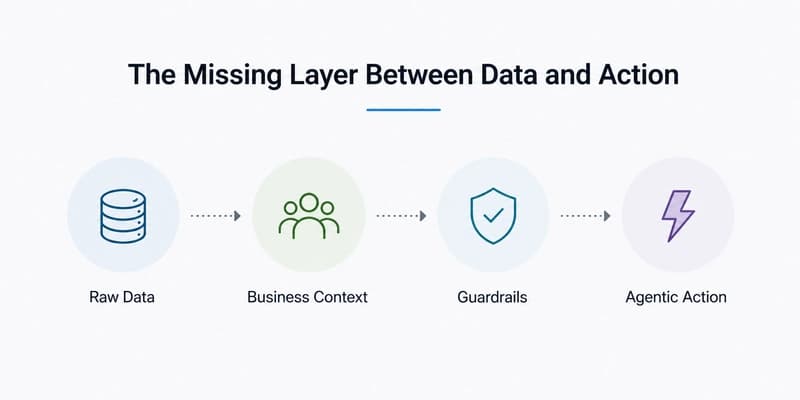
Everyone Wants AI Agents. Fewer Teams Are Ready for the Messy Business Context Behind Them
Dev.to
AI 编程工具对比 2026:Claude Code vs Cursor vs Gemini CLI vs Codex
Dev.to

How I Improved My YouTube Shorts and Podcast Audio Workflow with AI Tools
Dev.to

An improvement of the convergence proof of the ADAM-Optimizer
Dev.to


