
A Hierarchical Sampling Framework for bounding the Generalization Error of Federated Learning
arXiv cs.LG / 5/6/2026
📰 NewsIdeas & Deep AnalysisModels & Research
Key Points
- The paper proposes a hierarchical sampling framework for Hierarchical Federated Learning (HFL) and analyzes expected generalization error using Wasserstein distance.
- It models hierarchical data sampling with a multi-layer tree to capture dependencies among clients’ datasets, then derives Wasserstein-based generalization bounds under a Lipschitz loss assumption.
- A supersample construction is used to quantify how sensitive the learning algorithm is to changes at a single node in the sampling tree.
- The results both generalize and strictly imply existing conditional mutual information (CMI) bounds for bounded losses, leveraging the federated learning structure.
- The framework can be combined with Differential Privacy assumptions to yield generalization bounds tied to algorithmic privacy, and the paper validates tightness using the Gaussian Location Model (GLM).
Related Articles

Top 10 Free AI Tools for Students in 2026: The Ultimate Study Guide
Dev.to
AI as Your Contingency Co-Pilot: Automating Wedding Day 'What-Ifs'
Dev.to
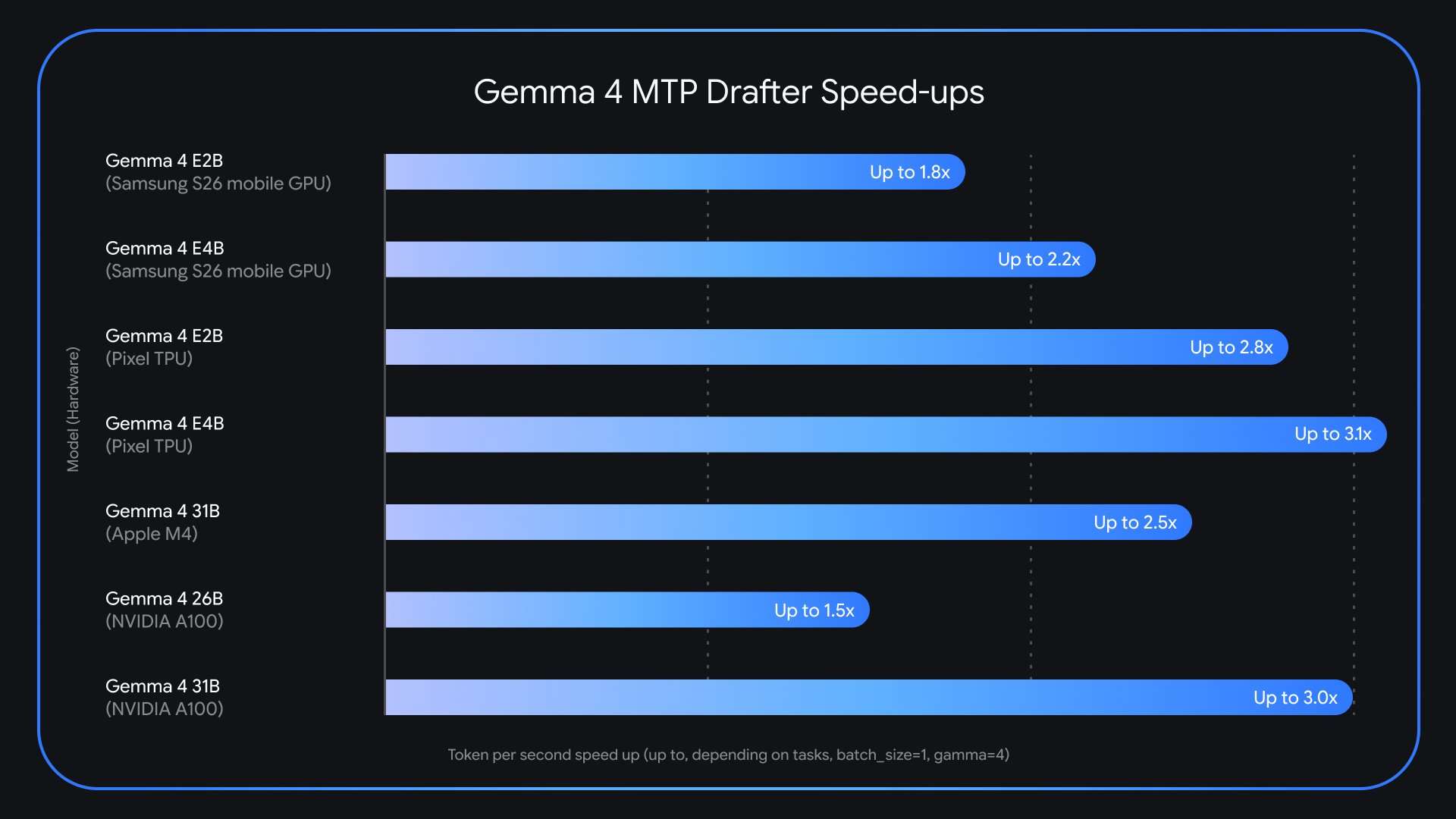
Google AI Releases Multi-Token Prediction (MTP) Drafters for Gemma 4: Delivering Up to 3x Faster Inference Without Quality Loss
MarkTechPost
When Claude Hallucinates in Court: The Latham & Watkins Incident and What It Means for Attorney Liability
MarkTechPost
Solidity LM surpasses Opus
Reddit r/LocalLLaMA


