
Design and Development of an ML/DL Attack Resistance of RC-Based PUF for IoT Security
arXiv cs.AI / 4/1/2026
💬 OpinionIdeas & Deep AnalysisModels & Research
Key Points
- The paper proposes a dynamically reconfigurable resistor-capacitor (RC) based Physically Unclonable Function (PUF) intended for secure IoT authentication in the face of ML/DL challenge-response modeling attacks.
- It evaluates attack resistance by creating a dataset of 32-bit challenge-response pairs and training multiple ML models (ANN, GBNN, decision trees, random forests, and XGBoost) using standard train/validation/test splits.
- Although all trained models reach 100% training accuracy, their test accuracy stays close to random guessing (roughly 50–53%), indicating the PUF responses are difficult for learned models to generalize.
- The authors claim the reconfigurable RC-PUF design improves robustness against adversarial ML threats while keeping hardware overhead minimal, positioning it as a low-cost alternative to heavier cryptographic approaches for IoT verification.
Related Articles

Show HN: 1-Bit Bonsai, the First Commercially Viable 1-Bit LLMs
Dev.to

I Built an AI Agent That Can Write Its Own Tools When It Gets Stuck
Dev.to

Agent Self-Discovery: How AI Agents Find Their Own Wallets
Dev.to
[P] Federated Adversarial Learning
Reddit r/MachineLearning
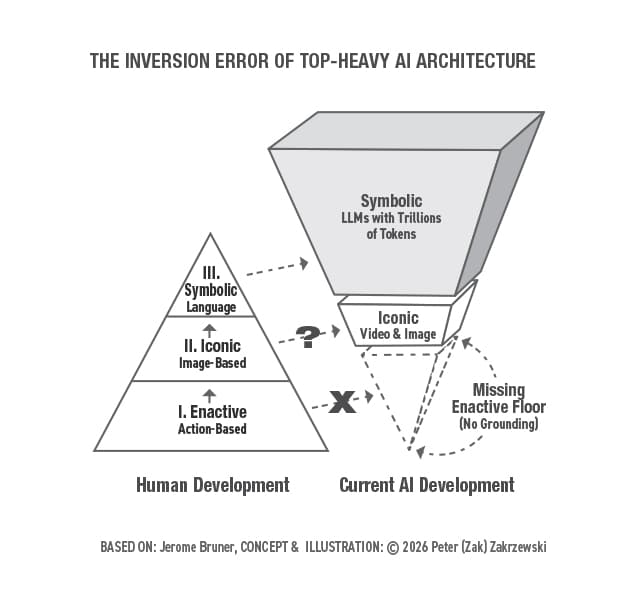
The Inversion Error: Why Safe AGI Requires an Enactive Floor and State-Space Reversibility
Towards Data Science


