
Stability and Generalization in Looped Transformers
arXiv cs.LG / 4/17/2026
📰 NewsModels & Research
Key Points
- The paper proposes a fixed-point analysis framework for looped transformers to determine which architectural choices enable generalization to harder test-time inputs.
- The authors analyze stability along three axes—reachability, input-dependence, and geometry—and provide theoretical conditions under which fixed-point iteration yields meaningful predictions.
- They prove that looped networks without recall have countably many fixed points and cannot achieve strong input-dependence in any spectral regime, limiting their extrapolation ability.
- By combining recall with outer normalization, the study identifies a regime where fixed points are reachable, locally smooth with respect to inputs, and support stable backpropagation.
- Experiments on chess, sudoku, and prefix-sums show downstream performance aligns with the framework’s predictions, and a new “internal recall” variant can outperform standard recall placement when outer normalization is used.
Related Articles

India's Homegrown AI Ecosystem: 110+ Apps Across 22 Languages and 28 Sectors
Dev.to

Privacy-Preserving Active Learning for sustainable aquaculture monitoring systems with inverse simulation verification
Dev.to
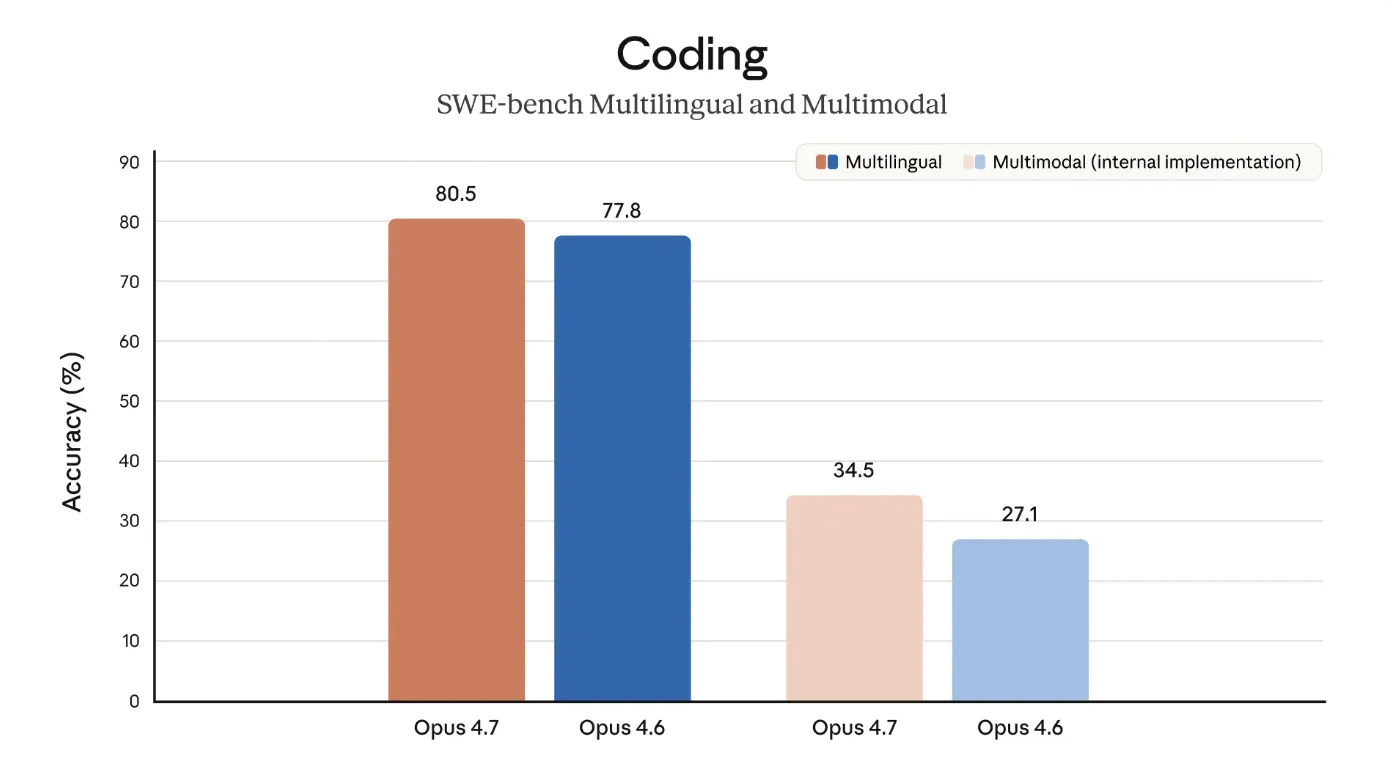
Anthropic Releases Claude Opus 4.7: A Major Upgrade for Agentic Coding, High-Resolution Vision, and Long-Horizon Autonomous Tasks
MarkTechPost

Open-Source ML Platforms, LLM Workflow Reliability, and AI Bot Deployment
Dev.to

Claude/Gemini Benchmarks, Claude Code Dev Tooling, and Gemma 4 on-device with LiteRT
Dev.to


