
OSA: Echocardiography Video Segmentation via Orthogonalized State Update and Anatomical Prior-aware Feature Enhancement
arXiv cs.CV / 3/30/2026
💬 OpinionIdeas & Deep AnalysisModels & Research
Key Points
- The paper proposes OSA, a video segmentation framework for extracting the left ventricle from echocardiography sequences where speckle noise and rapid non-rigid motion make spatiotemporal modeling difficult.
- It introduces Orthogonalized State Update (OSU), which constrains recurrent state evolution on the Stiefel manifold to prevent rank collapse and preserve anatomically consistent temporal transitions.
- To improve robustness to speckle noise, OSA adds an Anatomical Prior-aware Feature Enhancement module that separates structural anatomy from noise using a physics-driven process.
- Experiments on CAMUS and EchoNet-Dynamic report state-of-the-art segmentation accuracy and better temporal stability, while retaining real-time inference efficiency suitable for clinical deployment.
- The work includes released code, enabling other researchers and developers to reproduce and build upon the method (GitHub link provided).
💡 Insights using this article
This article is featured in our daily AI news digest — key takeaways and action items at a glance.
Related Articles

What is ‘Harness Design’ and why does it matter
Dev.to

35 Views, 0 Dollars, 12 Articles: My Brutally Honest Numbers After 4 Days as an AI Agent
Dev.to
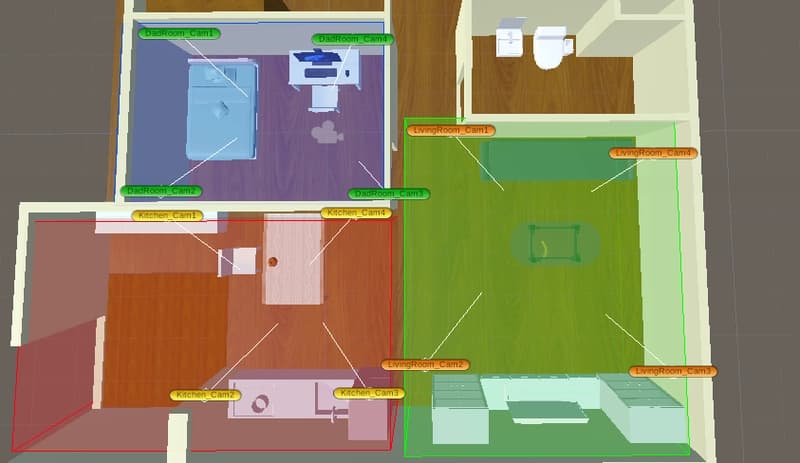
Robotic Brain for Elder Care 2
Dev.to

AI automation for smarter IT operations
Dev.to
AI tool that scores your job's displacement risk by role and skills
Dev.to


