
From Baselines to Preferences: A Comparative Study of LoRA/QLoRA and Preference Optimization for Mental Health Text Classification
arXiv cs.CL / 4/3/2026
💬 OpinionIdeas & Deep AnalysisModels & Research
Key Points
- The paper provides a systematic comparison of optimization strategies for mental-health text classification, starting from strong vanilla and classical baselines and progressively moving to more specialized methods.
- It evaluates parameter-efficient supervised fine-tuning using LoRA/QLoRA across multiple objective and optimization settings, while also testing preference optimization methods including DPO, ORPO, and KTO with class-rebalanced training.
- Results indicate that gains are highly method-dependent: some approaches produce stable, transferable improvements, while others are sensitive to configuration choices and data balance.
- Preference optimization shows especially large variation across objective formulations, suggesting that simply adding preference-training is not sufficient—method selection matters more than the presence of a preference stage.
- The authors propose a reproducible “optimization narrative” for mental-health NLP: begin with transparent baselines, apply controlled tuning, and use preference optimization only when it demonstrably improves performance.
Related Articles

90000 Tech Workers Got Fired This Year and Everyone Is Blaming AI but Thats Not the Whole Story
Dev.to

Microsoft’s $10 Billion Japan Bet Shows the Next AI Battleground Is National Infrastructure
Dev.to
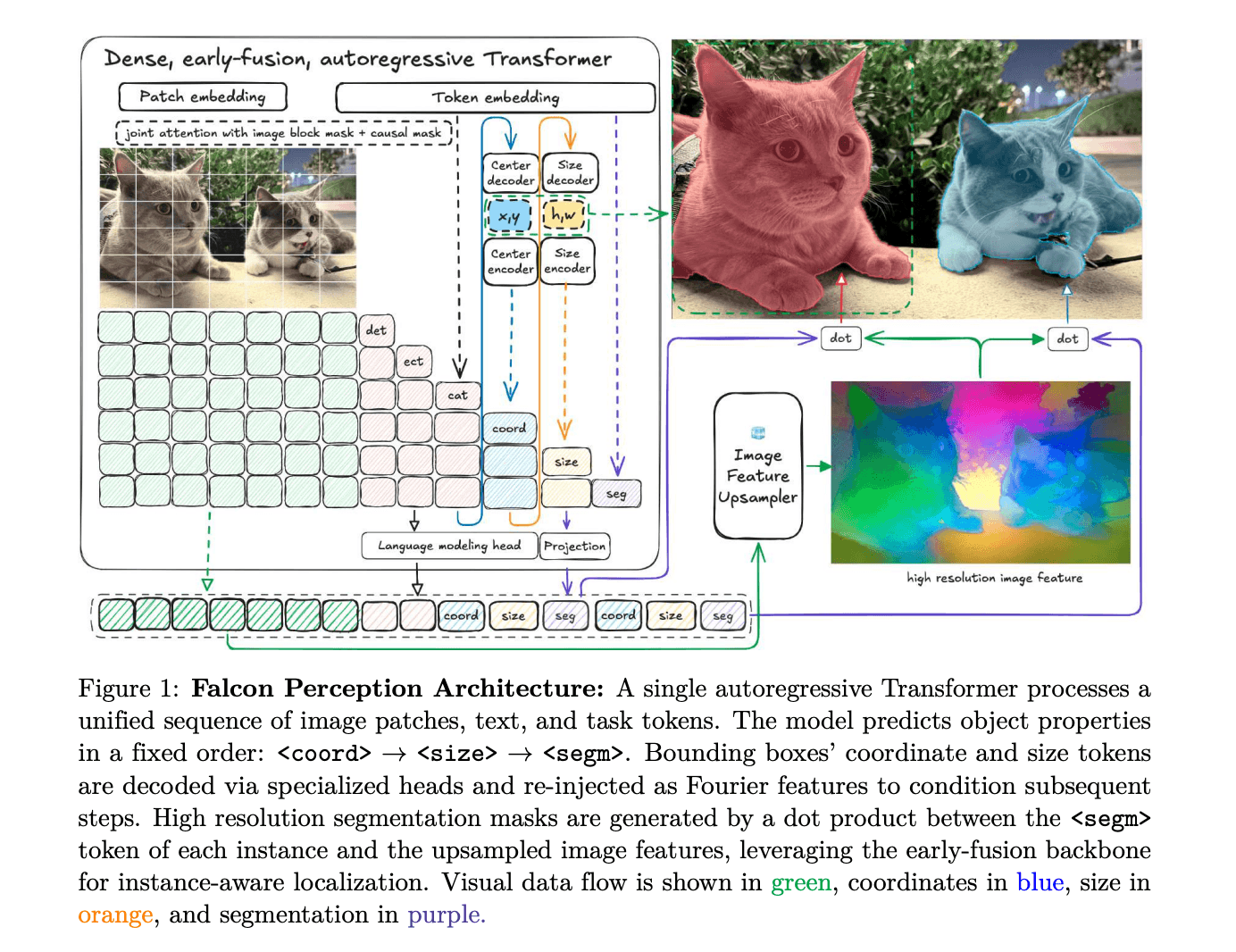
TII Releases Falcon Perception: A 0.6B-Parameter Early-Fusion Transformer for Open-Vocabulary Grounding and Segmentation from Natural Language Prompts
MarkTechPost
The house asked me a question
Dev.to

Precision Clip Selection: How AI Suggests Your In and Out Points
Dev.to


