
Frequency-Enhanced Dual-Subspace Networks for Few-Shot Fine-Grained Image Classification
arXiv cs.CV / 4/17/2026
📰 NewsModels & Research
Key Points
- The paper introduces FEDSNet, a method for few-shot fine-grained image classification that targets texture bias and noise overfitting common in single-view metric learning approaches.
- It separates low-frequency global structure from spatial features using DCT-based low-pass filtering to suppress background interference.
- FEDSNet builds two independent low-rank subspaces via truncated SVD—one capturing spatial texture and the other capturing frequency structural information.
- An adaptive gating mechanism fuses distances from both subspaces, leveraging the frequency subspace’s stability to improve structural robustness under few-shot settings.
- Experiments on CUB-200-2011, Stanford Cars, Stanford Dogs, and FGVC-Aircraft show strong and efficient performance versus existing metric learning methods.
Related Articles
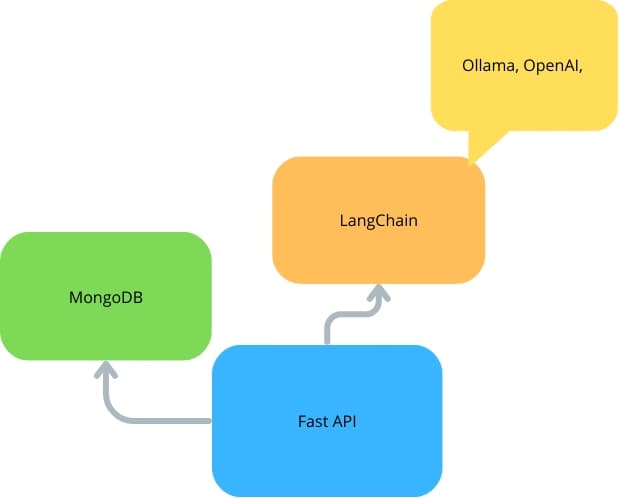
FastAPI With LangChain and MongoDB
Dev.to
![[2026] OpenTelemetry for LLM Observability — Self-Hosted Setup](/_next/image?url=https%3A%2F%2Fmedia2.dev.to%2Fdynamic%2Fimage%2Fwidth%3D1200%2Cheight%3D627%2Cfit%3Dcover%2Cgravity%3Dauto%2Cformat%3Dauto%2Fhttps%253A%252F%252Fdev-to-uploads.s3.amazonaws.com%252Fuploads%252Farticles%252Flu4b6ttuhur71z5gemm0.png&w=3840&q=75)
[2026] OpenTelemetry for LLM Observability — Self-Hosted Setup
Dev.to

The AI Education Product on Product Hunt Worth Watching
Dev.to

The joy and pain of training an LLM from scratch
Reddit r/LocalLLaMA

Did you know that you can use Qwen3.5-35B-A3B-Base as an instruction/reasoning Model?
Reddit r/LocalLLaMA


