
An Edge-Cloud Collaborative Architecture for Proactive Elderly Care: Real-Time Risk Assessment and Three-Level Emergency Response
arXiv cs.AI / 4/17/2026
💬 OpinionDeveloper Stack & InfrastructureModels & Research
Key Points
- The paper addresses limitations of cloud-only elderly monitoring by proposing an edge-cloud collaborative system designed for real-time, low-latency emergency response while reducing privacy risk.
- It introduces a multi-modal sensor-fusion approach at the edge using a weighted algorithm across five sensor types with confidence propagation to support robust real-time assessment.
- A four-dimensional risk assessment model produces a unified risk score by combining fall probability, physiological indicators, behavioral patterns, and sensor anomaly metrics.
- The system implements a three-level emergency notification workflow across family members, community doctors, and nearby volunteers, coordinating responses via dynamic thresholds.
- Experiments on CASAS, MIMIC-III, and SisFall report 91% activity recognition accuracy and an 84% anomaly detection F1-score, and Raspberry Pi 4 deployment achieves sub-100 ms inference with raw data kept local for privacy.
Related Articles
langchain-anthropic==1.4.1
LangChain Releases

Stop burning tokens on DOM noise: a Playwright MCP optimizer layer
Dev.to

Talk to Your Favorite Game Characters! Mantella Brings AI to Skyrim and Fallout 4 NPCs
Dev.to
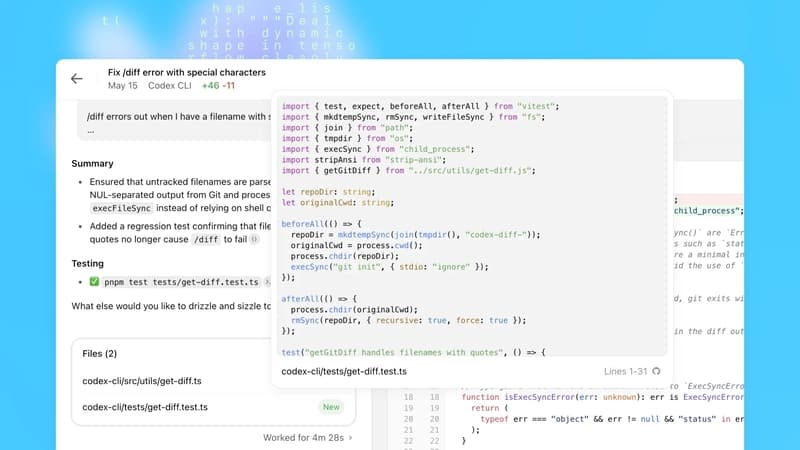
OpenAI Codex Update Adds macOS Agent, Browser, Memory; 3M Weekly Users
Dev.to

How Data Science Is Used to Predict User BeReducing Human Error in Compliance With AI Technology havior
Dev.to


