
ReLeaf: Benchmarking Leaf Segmentation across Domains and Species
arXiv cs.CV / 5/6/2026
📰 NewsSignals & Early TrendsModels & Research
Key Points
- The paper highlights that precise leaf-level segmentation is essential for individualized, automated plant treatment, but the field lags due to limited and species-poor datasets and a lack of systematic evaluations of modern instance-segmentation models.
- It surveys existing leaf-segmentation datasets, selects four public ones, and benchmarks one-stage, two-stage, and Transformer-based detectors, ultimately recommending a specific YOLO26 configuration as a strong real-world trade-off.
- Cross-domain experiments show significant performance degradation when transferring across plant species and recording setups, with the largest drops for models trained only on laboratory data.
- To improve dataset coverage, the authors introduce a new benchmark containing leaf-level masks for 23 plant species, and a model trained on all four existing datasets reaches 83.9% mean mAP50-95 on their test sets and 40.2% mAP on the new benchmark.
- Overall, the study demonstrates both improved generalization from multi-dataset training and the critical need for diverse, representative leaf-segmentation datasets for robust precision agriculture.
Related Articles

Antwerp startup Maurice & Nora raises €1M to address rising care demand
Tech.eu

Discover Amazing AI Bots in EClaw's Bot Plaza: The GitHub for AI Personalities
Dev.to
Amd radeon ai pro r9700 32GB VS 2x RTX 5060TI 16GB for local setup?
Reddit r/LocalLLaMA
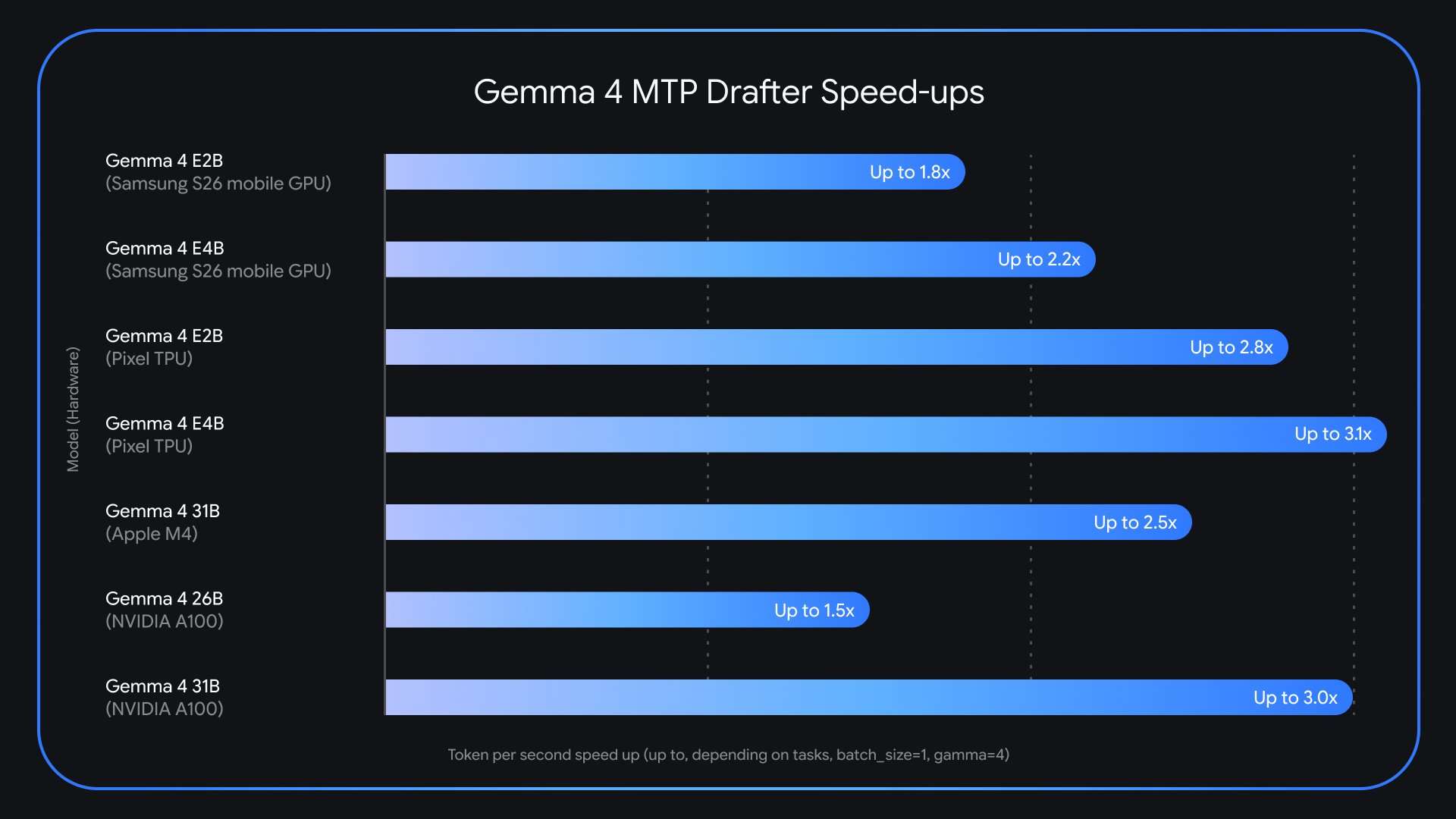
Google AI Releases Multi-Token Prediction (MTP) Drafters for Gemma 4: Delivering Up to 3x Faster Inference Without Quality Loss
MarkTechPost

Renaissance Philanthropy reshapes science funding with a new model for innovation
Tech.eu


