
Adversarial Imitation Learning with General Function Approximation: Theoretical Analysis and Practical Algorithms
arXiv cs.LG / 5/5/2026
📰 NewsModels & Research
Key Points
- The paper addresses a gap in adversarial imitation learning (AIL) theory by analyzing online AIL under general (neural-network-like) function approximation rather than simplified tabular/linear settings.
- It introduces a new framework, optimization-based AIL (OPT-AIL), which couples online reward-learning optimization with optimism-regularized optimization for policy learning.
- The authors develop two variants—model-free OPT-AIL and model-based OPT-AIL—and prove polynomial expert sample and interaction complexity for learning near-expert policies.
- The work claims to be the first provably efficient AIL approach under general function approximation, with practical algorithms that only require approximate optimization of two objectives.
- Experiments show OPT-AIL outperforms prior state-of-the-art deep AIL methods on multiple difficult tasks.
💡 Insights using this article
This article is featured in our daily AI news digest — key takeaways and action items at a glance.
Related Articles
Why Retail Chargeback Recovery Could Be AgentHansa's First Real PMF
Dev.to
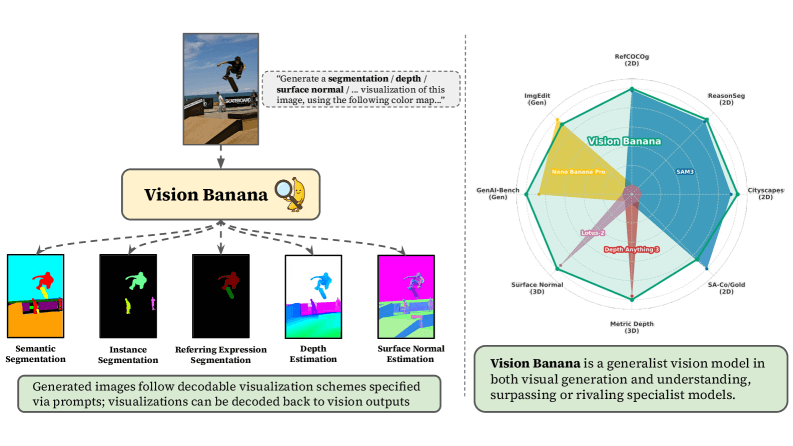
Last Week in AI #340 - OpenAI vs Musk + Microsoft, DeepSeek v4, Vision Banana
Last Week in AI

Trying to train tiny LLMs on length constrained reddit posts summarization task using GRPO on 3xMac Minis - updates!
Reddit r/LocalLLaMA

Uber Shares What Happens When 1.500 AI Agents Hit Production
Reddit r/artificial
vibevoice.cpp: Microsoft VibeVoice (TTS + long-form ASR with diarization) ported to ggml/C++, runs on CPU/CUDA/Metal/Vulkan, no Python at inference
Reddit r/LocalLLaMA


