
deSEO: Physics-Aware Dataset Creation for High-Resolution Satellite Image Shadow Removal
arXiv cs.CV / 5/6/2026
📰 NewsModels & Research
Key Points
- The paper introduces deSEO, a physics-aware, geometry-consistent approach to create paired (shadow / shadow-free) supervision for high-resolution satellite image shadow removal.
- It fills a gap in existing Earth-observation datasets, which are often designed for shadow detection or 3D modeling and typically lack paired, geometry-consistent shadow-free targets.
- deSEO builds pairs from the S-EO shadow detection dataset by selecting weak-reference tiles and using temporal/geometric filtering plus Jacobian-based orientation normalization and LoFTR-RANSAC registration.
- The method uses a per-pixel validity mask to limit learning to reliably aligned regions, and it trains a DSM-aware deshadowing model that combines residual translation, perceptual losses, and mask-constrained adversarial learning.
- Experiments show consistent reductions in shadow visual impact across varying illumination and viewing conditions, while a direct adaptation of UAV-based SRNet/pix2pix architectures fails to converge for satellite viewpoint variability.
Related Articles
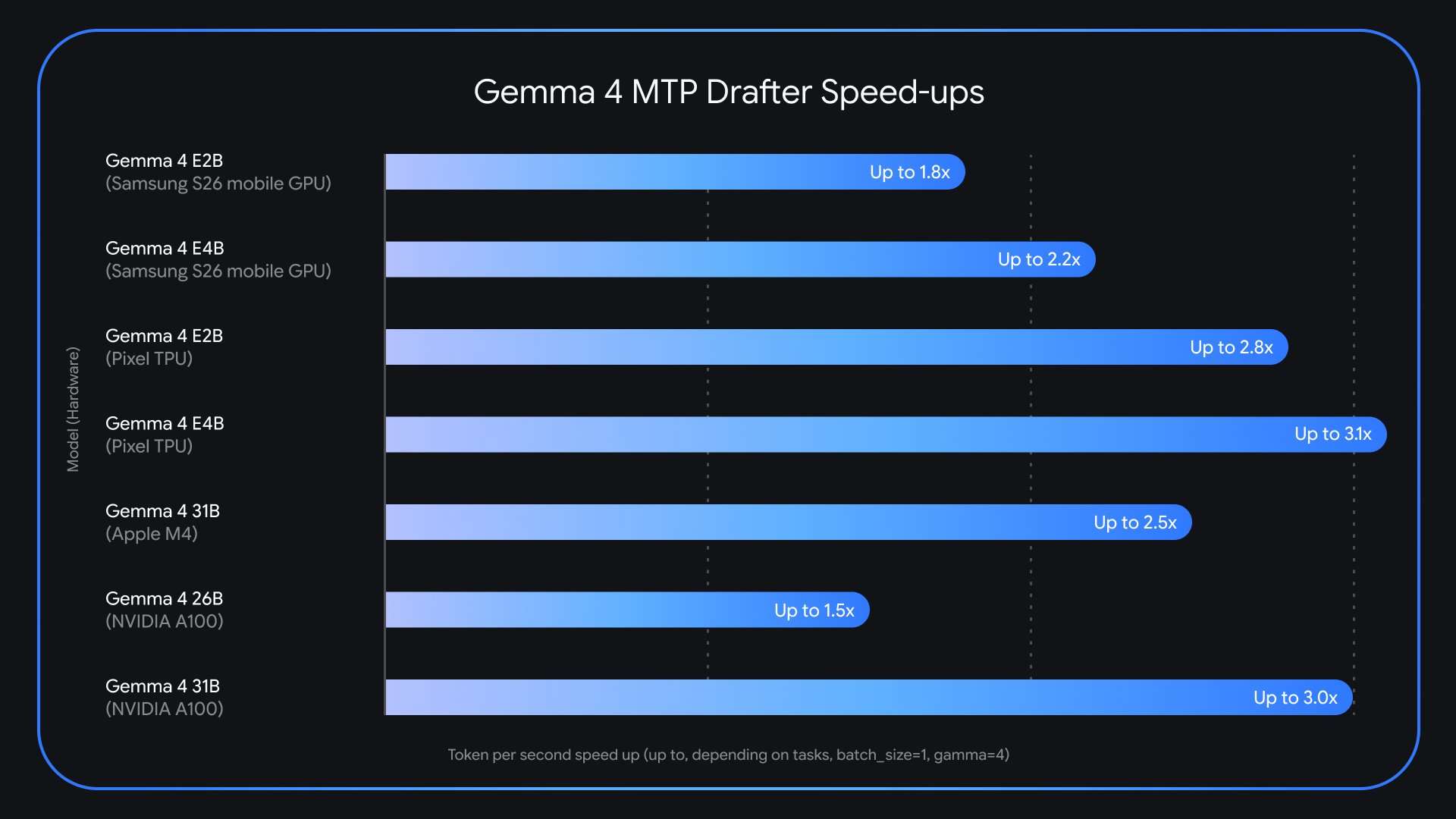
Google AI Releases Multi-Token Prediction (MTP) Drafters for Gemma 4: Delivering Up to 3x Faster Inference Without Quality Loss
MarkTechPost
Solidity LM surpasses Opus
Reddit r/LocalLLaMA

Quality comparison between Qwen 3.6 27B quantizations (BF16, Q8_0, Q6_K, Q5_K_XL, Q4_K_XL, IQ4_XS, IQ3_XXS,...)
Reddit r/LocalLLaMA

We measured the real cost of running a GPT-5.4 chatbot on live websites
Reddit r/artificial

AI ecosystems in China and US grow apart amid tech war
SCMP Tech


