
Leveraging Natural Language Processing and Machine Learning for Evidence-Based Food Security Policy Decision-Making in Data-Scarce Making
arXiv cs.AI / 3/24/2026
💬 OpinionSignals & Early TrendsIdeas & Deep AnalysisModels & Research
Key Points
- The paper introduces ZeroHungerAI, an integrated NLP and ML framework for evidence-based food security policy modeling in data-scarce, text-fragmented regions.
- It uses transfer learning with a DistilBERT-based approach to combine structured socio-economic indicators with contextual policy text embeddings.
- On a 1,200-sample hybrid dataset covering 25 districts, the method achieves strong results under class imbalance, including 91% classification accuracy, 0.89 precision, 0.85 recall, and 0.86 F1.
- Comparative experiments show 13% improvement over SVM and 17% over Logistic Regression, with precision-recall metrics indicating reliable minority-class detection.
- A fairness-aware optimization step reduces demographic parity differences to 3%, supporting more equitable rural–urban policy inference.
Related Articles
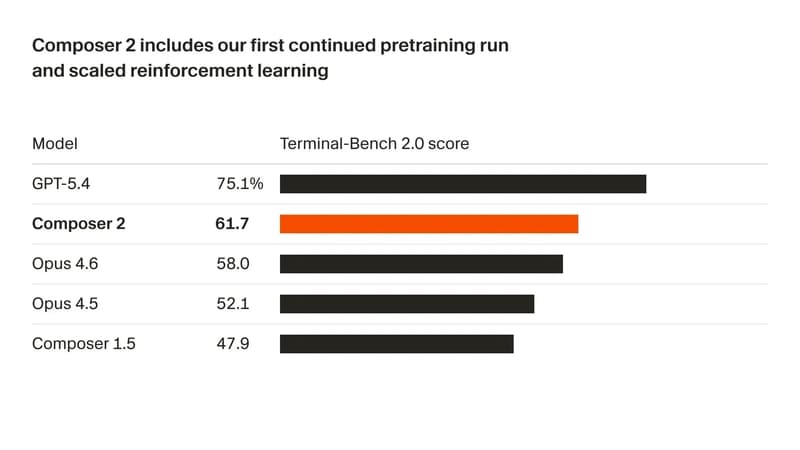
Composer 2: What is new and Compares with Claude Opus 4.6 & GPT-5.4
Dev.to
How UCP Breaks Your E-Commerce Tracking Stack: A Platform-by-Platform Analysis
Dev.to
AI Text Analyzer vs Asking Friends: Which Gives Better Perspective?
Dev.to
[D] Cathie wood claims ai productivity wave is starting, data shows 43% of ceos save 8+ hours weekly
Reddit r/MachineLearning

Microsoft hires top AI researchers from Allen Institute for AI for Suleyman's Superintelligence team
THE DECODER


