
RunAgent: Interpreting Natural-Language Plans with Constraint-Guided Execution
arXiv cs.LG / 5/4/2026
📰 NewsDeveloper Stack & InfrastructureModels & Research
Key Points
- RunAgent is a multi-agent platform for executing natural-language plans with improved reliability by enforcing step-by-step execution using constraints and rubrics.
- It introduces an agentic language with explicit control constructs such as IF, GOTO, and FORALL, combining the flexibility of natural language with more deterministic, program-like control.
- For each step, RunAgent not only verifies the step’s syntactic and semantic output but also autonomously derives and validates relevant constraints from the task description and the specific instance.
- The system dynamically chooses among LLM-based reasoning, tool use, and code generation/execution (e.g., Python), and includes error-correction mechanisms to maintain correctness.
- Experiments on Natural-plan and SciBench datasets show RunAgent outperforms baseline LLMs and existing state-of-the-art PlanGEN approaches.
💡 Insights using this article
This article is featured in our daily AI news digest — key takeaways and action items at a glance.
Related Articles
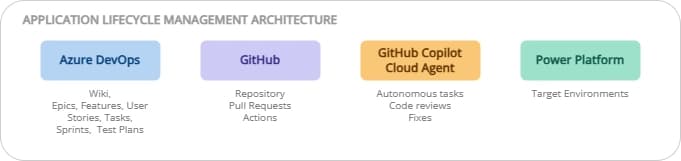
ALM on Power Platform: ADO + GitHub, the best of both worlds
Dev.to

Iron Will, Iron Problems: Kiwi-chan's Mining Misadventures! 🥝⛏️
Dev.to
Experiment: Does repeated usage influence ChatGPT 5.4 outputs in a RAG-like setup?
Dev.to

How I Automated VPN Deployment with AI: The World's First AI-Powered VPN Kit
Dev.to
Claude Desktop + NFTs: MCP Tools for AI Agent NFT Management
Dev.to


