
SemanticAgent: A Semantics-Aware Framework for Text-to-SQL Data Synthesis
arXiv cs.AI / 4/25/2026
📰 NewsModels & Research
Key Points
- The paper argues that current text-to-SQL data synthesis relies too heavily on executability, which can preserve queries that run but still violate intended database semantics.
- It introduces SemanticAgent, a semantics-aware framework that structures generation into three modules: an analyzer, a synthesizer, and a verifier.
- Using a three-stage protocol (semantic analysis, stepwise synthesis, and diagnostic refinement), SemanticAgent converts execution-based checking into a more traceable reasoning workflow.
- Experiments show SemanticAgent produces synthetic data that outperforms prior methods on semantic-quality evaluations and improves downstream fine-tuning performance, especially on semantics-intensive benchmarks.
Related Articles

Underwhelming or underrated? DeepSeek V4 shows “impressive” gains
SCMP Tech

Debugging AI Agents in Production: ADK+Gemini Cloud Assist | Google Cloud NEXT '26
Dev.to
🤖 Learn Harness Engineering by Building a Mini Openclaw 🦞
Dev.to
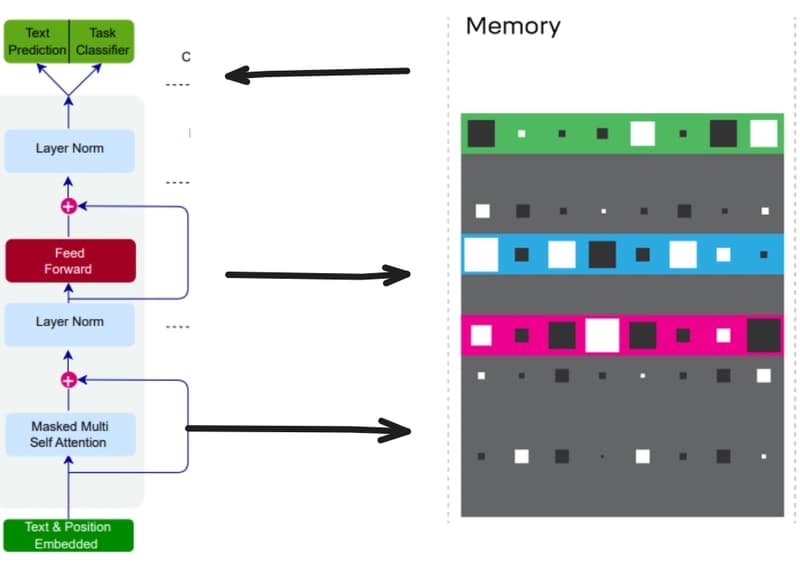
Teaching Small Language Models to Remember: Giving LLMs a Notebook with Differentiable Neural Computers
Dev.to
![Training LFM-2.5-350M on Reddit post summarization with GRPO on my 3x Mac Minis — final evals and t-test evals are here [P]](/_next/image?url=https%3A%2F%2Fpreview.redd.it%2Fzynqkm0osaxg1.png%3Fwidth%3D140%26height%3D76%26auto%3Dwebp%26s%3De827ef782e46b56a11f263b7689811da72904ba9&w=3840&q=75)
Training LFM-2.5-350M on Reddit post summarization with GRPO on my 3x Mac Minis — final evals and t-test evals are here [P]
Reddit r/MachineLearning


