
Hierarchical Multi-Persona Induction from User Behavioral Logs: Learning Evidence-Grounded and Truthful Personas
arXiv cs.AI / 4/30/2026
📰 NewsModels & Research
Key Points
- The paper addresses how to generate high-quality user personas from noisy, interleaved behavioral logs, building on prior work that uses LLMs but often lacks strong assurance of persona quality.
- It introduces a hierarchical framework that aggregates user actions into intent “memories,” then induces multiple personas by clustering and labeling these memories.
- Persona quality is optimized using an objective that balances cluster cohesion, alignment between personas and evidence, and “truthfulness” of the personas.
- The authors train the persona model with a groupwise extension of Direct Preference Optimization (DPO) to improve the resulting personas.
- Experiments on a large service-log dataset and two public datasets show the approach produces more coherent, evidence-grounded, and trustworthy personas and also improves future interaction prediction.
Related Articles
Looking for feedback on OpenVidya: an open-source AI classroom layer for NCERT/CBSE [R]
Reddit r/MachineLearning
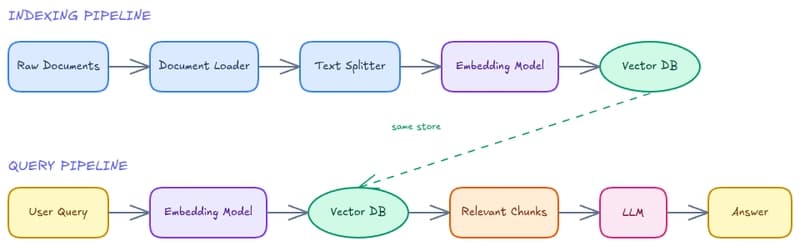
RAG Series (1): Why LLMs Need External Memory
Dev.to
One Open Source Project a Day (No. 54): Warp - The AI-Native Rust Terminal
Dev.to
One Open Source Project a Day (No. 53): pi-mono - Minimalist & High-Performance AI Coding Agent
Dev.to
Best Open Source Subtitle Generator? Canary Qwen 2.5B + Whisper Full Guide
Dev.to


