
ADE: Adaptive Dictionary Embeddings -- Scaling Multi-Anchor Representations to Large Language Models
arXiv cs.CL / 4/29/2026
📰 NewsDeveloper Stack & InfrastructureModels & Research
Key Points
- The paper introduces Adaptive Dictionary Embeddings (ADE), a framework that scales multi-anchor word representations—previously too inefficient for large models—into large language model architectures.
- ADE’s core components include Vocabulary Projection to replace expensive anchor lookups with efficient matrix operations, Grouped Positional Encoding to share position information among anchors of the same word, and self-attention-based context-aware anchor reweighting.
- ADE is integrated into a Segment-Aware Transformer (SAT) to perform context-aware anchor weighting during inference.
- On AG News and DBpedia-14, ADE shows strong parameter efficiency (98.7% fewer trainable parameters than DeBERTa-v3-base), surpasses DeBERTa on DBpedia-14, and approaches DeBERTa on AG News while compressing the embedding layer by over 40×.
- Overall, the results suggest multi-anchor representations can be a practical, parameter-efficient alternative to single-vector word embeddings in modern transformers.
Related Articles
LLMs will be a commodity
Reddit r/artificial

What it feels like to have to have Qwen 3.6 or Gemma 4 running locally
Reddit r/LocalLLaMA
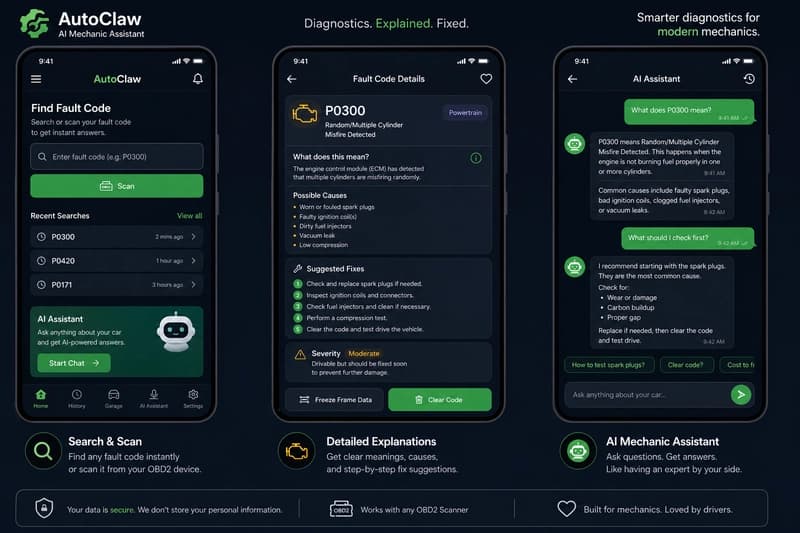
From Fault Codes to Smart Fixes: How Google Cloud NEXT ’26 Inspired My AI Mechanic Assistant
Dev.to

Dex lands $5.3M to grow its AI-driven talent matching platform
Tech.eu

7 OpenClaw Money-Making Cases in One Week — and the Hidden Cost Problem Behind Them
Dev.to


