
Local Causal Discovery for Statistically Efficient Causal Inference
arXiv stat.ML / 4/1/2026
💬 OpinionIdeas & Deep AnalysisModels & Research
Key Points
- The paper proposes LOAD (Local Optimal Adjustments Discovery), a causal discovery method that aims to keep local approaches computationally efficient while achieving global methods’ statistical efficiency for adjustment set selection.
- LOAD first uses only local information to determine whether the causal effect between target variables is identifiable, which governs whether it can compute the optimal adjustment set.
- If identifiable, LOAD infers the optimal adjustment set by finding possible descendants of the treatment and using a modified forbidden projection to derive the outcome’s parents.
- If not identifiable, LOAD still returns locally valid (sound) parent adjustment sets, ensuring correctness even when optimality can’t be guaranteed.
- Experiments on synthetic and realistic datasets show LOAD scales better than global causal discovery methods and improves accuracy over standard local methods for effect estimation.
Related Articles

90000 Tech Workers Got Fired This Year and Everyone Is Blaming AI but Thats Not the Whole Story
Dev.to

Microsoft’s $10 Billion Japan Bet Shows the Next AI Battleground Is National Infrastructure
Dev.to
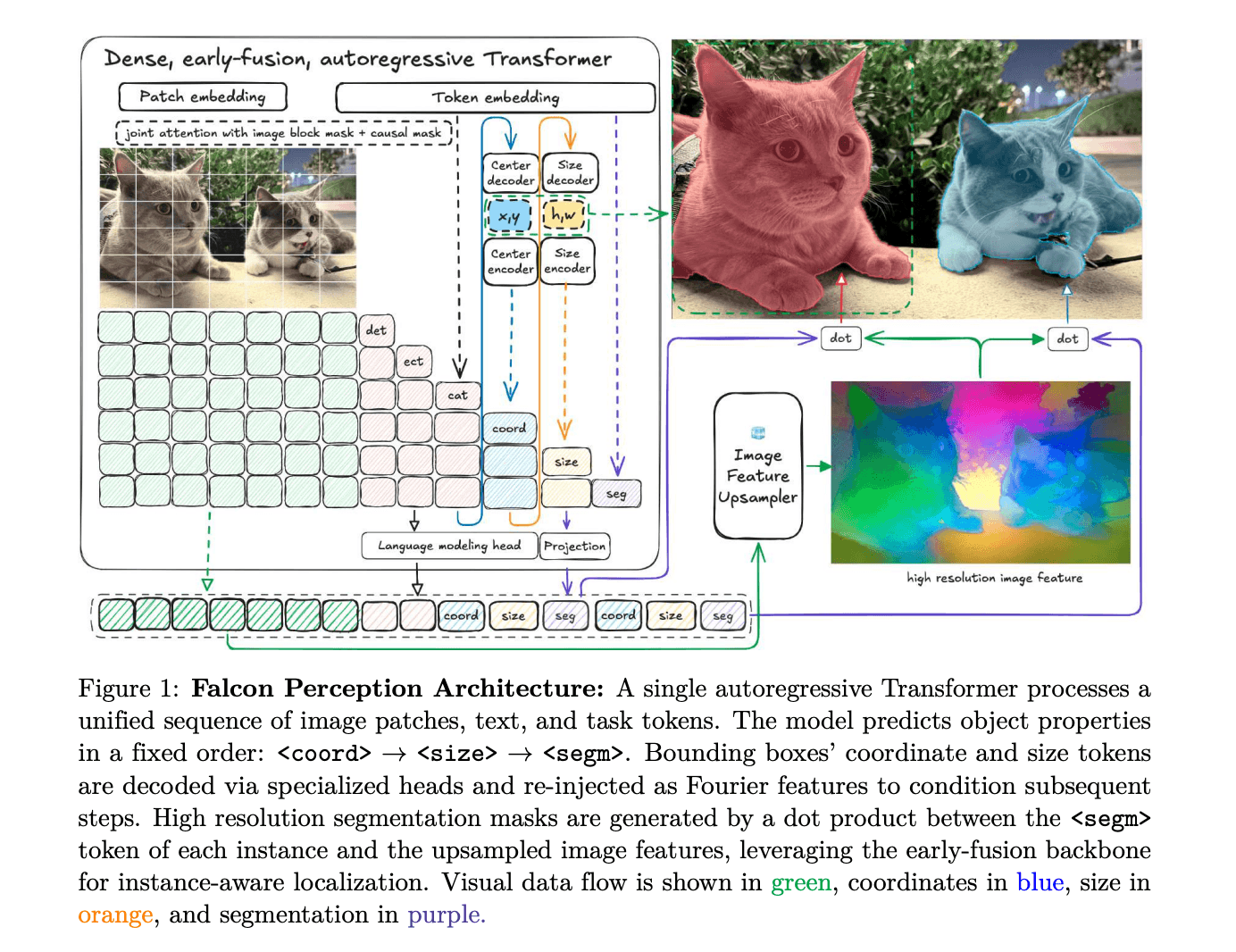
TII Releases Falcon Perception: A 0.6B-Parameter Early-Fusion Transformer for Open-Vocabulary Grounding and Segmentation from Natural Language Prompts
MarkTechPost

The house asked me a question
Dev.to

Precision Clip Selection: How AI Suggests Your In and Out Points
Dev.to


