
Evolution of Optimization Methods: Algorithms, Scenarios, and Evaluations
arXiv cs.LG / 4/15/2026
💬 OpinionSignals & Early TrendsIdeas & Deep AnalysisModels & Research
Key Points
- The paper frames deep learning optimization as a trade-off between convergence speed, generalization quality, and computational efficiency, noting that first-order methods like SGD and Adam are often challenged at scale.
- It highlights that large-scale training, differential privacy constraints, and distributed learning can expose shortcomings in standard optimizers, motivating renewed interest in second-order and zeroth-order approaches.
- The authors argue the ecosystem lacks a unified framework that explains common principles and clarifies when each optimizer family is most appropriate.
- They provide a retrospective analysis and comprehensive empirical evaluation of mainstream optimizers across varied architectures and training scenarios, distilling emerging trends and design trade-offs.
- The work concludes with practical guidance for building more efficient, robust, and trustworthy optimization methods, alongside an open-source code release.
Related Articles

Black Hat Asia
AI Business
The Complete Guide to Better Meeting Productivity with AI Note-Taking
Dev.to
5 Ways Real-Time AI Can Boost Your Sales Call Performance
Dev.to
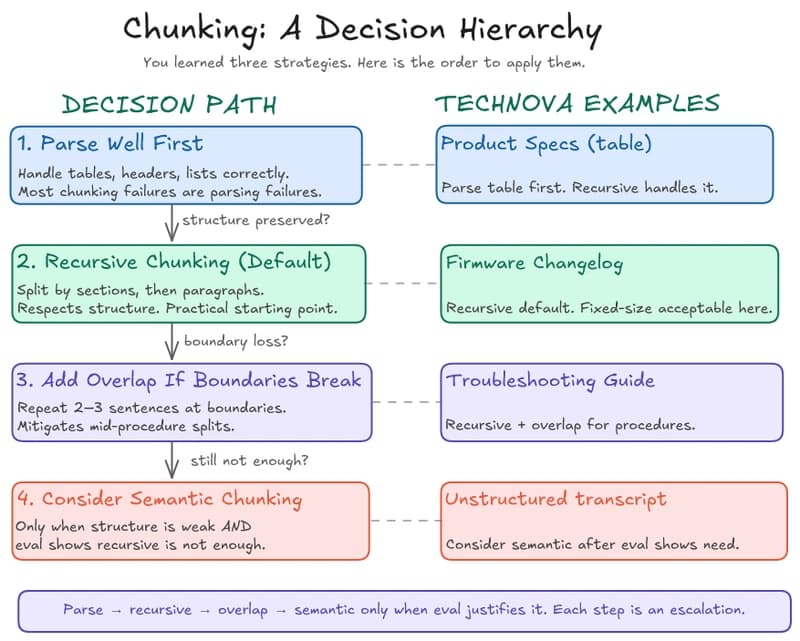
RAG in Practice — Part 4: Chunking, Retrieval, and the Decisions That Break RAG
Dev.to
Why dynamically routing multi-timescale advantages in PPO causes policy collapse (and a simple decoupled fix) [R]
Reddit r/MachineLearning


