
Photon: Speedup Volume Understanding with Efficient Multimodal Large Language Models
arXiv cs.CV / 3/27/2026
📰 NewsSignals & Early TrendsIdeas & Deep AnalysisModels & Research
Key Points
- Photon is presented as a framework for multimodal large language models to better handle 3D medical volumes in clinical visual question answering without relying on 2D slices or fixed-length token compression.
- It represents 3D volumes as variable-length token sequences and uses instruction-conditioned token scheduling plus surrogate gradient propagation to adaptively reduce tokens during both training and inference.
- Photon includes a custom backpropagation rule with gradient restoration to support differentiable optimization even when discrete token dropping is used.
- To improve reliability of visual evidence, it adds regularization objectives intended to reduce language-only bias and mitigate attention dilution from redundant tokens.
- Experiments across multiple medical VQA tasks reportedly achieve state-of-the-art accuracy while lowering compute and speeding up training and inference.
広告
💡 Insights using this article
This article is featured in our daily AI news digest — key takeaways and action items at a glance.
Related Articles
Got My 39-Agent System Audited Live. Here's What the Maturity Scorecard Revealed.
Dev.to
The Redline Economy
Dev.to
$500 GPU outperforms Claude Sonnet on coding benchmarks
Dev.to
From Scattershot to Sniper: AI for Hyper-Personalized Media Lists
Dev.to
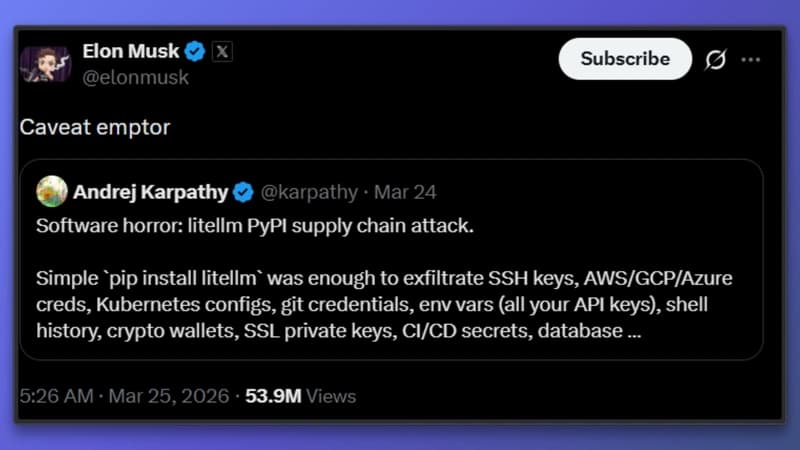
The LiteLLM Supply Chain Attack: A Wake-Up Call for AI Infrastructure
Dev.to


