
Robust Test-time Video-Text Retrieval: Benchmarking and Adapting for Query Shifts
arXiv cs.CV / 4/24/2026
💬 OpinionIdeas & Deep AnalysisModels & Research
Key Points
- The paper shows that modern video-text retrieval (VTR) models perform well on standard in-distribution benchmarks but can fail sharply in real-world situations where query distributions shift from the training domain.
- It introduces a new, comprehensive benchmark that tests robustness against 12 types of video perturbations at five severity levels, targeting spatio-temporal query shifts that image-only approaches cannot cover.
- The analysis finds that query shifts worsen the “hubness” problem, where a small number of gallery items become dominant hubs that receive disproportionate matches.
- To address this, the authors propose HAT-VTR, a test-time adaptation method using hubness suppression via memory-based similarity refinement and multi-granular losses to enforce temporal feature consistency.
- Experiments indicate HAT-VTR significantly improves robustness and reliability across many query-shift scenarios, outperforming prior methods consistently.
Related Articles
The 67th Attempt: When Your "Knowledge Management" System Becomes a Self-Fulfilling Prophecy of Excellence
Dev.to
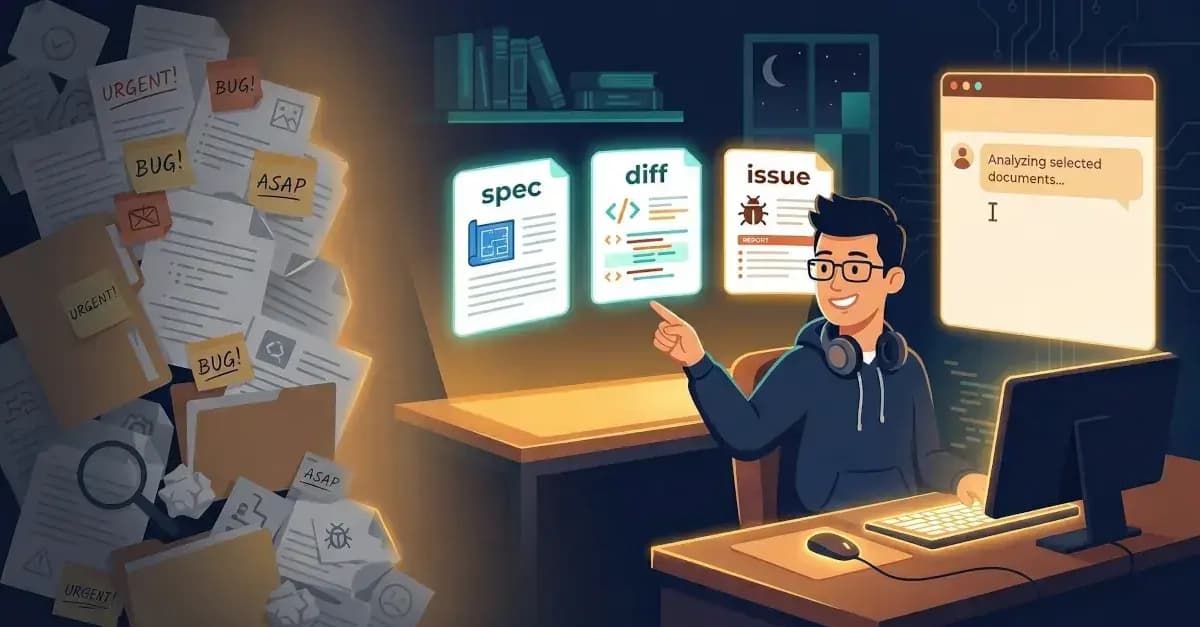
Context Engineering for Developers: A Practical Guide (2026)
Dev.to
GPT-5.5 is here. So is DeepSeek V4. And honestly, I am tired of version numbers.
Dev.to
I Built an AI Image Workflow with GPT Image 2.0 (+ Fixing Its Biggest Flaw)
Dev.to
Max-and-Omnis/Nemotron-3-Super-64B-A12B-Math-REAP-GGUF
Reddit r/LocalLLaMA


