
EEG-SeeGraph: Interpreting functional connectivity disruptions in dementias via sparse-explanatory dynamic EEG-graph learning
arXiv cs.LG / 3/19/2026
💬 OpinionIdeas & Deep AnalysisModels & Research
Key Points
- The paper introduces SeeGraph, a Sparse-Explanatory dynamic EEG-graph network for robust and interpretable dementia diagnosis from noisy EEG data.
- It features a dual-trajectory temporal encoder that models dynamic EEG with node signals (regional oscillations) and edge signals (interregional coupling), plus a topology-aware positional encoder to derive graph-spectral Laplacian coordinates for richer node embeddings.
- It employs a node-guided sparse explanatory edge mask to gate connectivity into a compact subgraph, yielding interpretable, disease-relevant connections while remaining robust to noise and cross-site variability.
- The model is trained with cross-entropy loss and a sparsity regularizer, and validation on public and in-house cohorts shows explanations align with clinical findings, supporting transparent neurological evaluation.
Related Articles
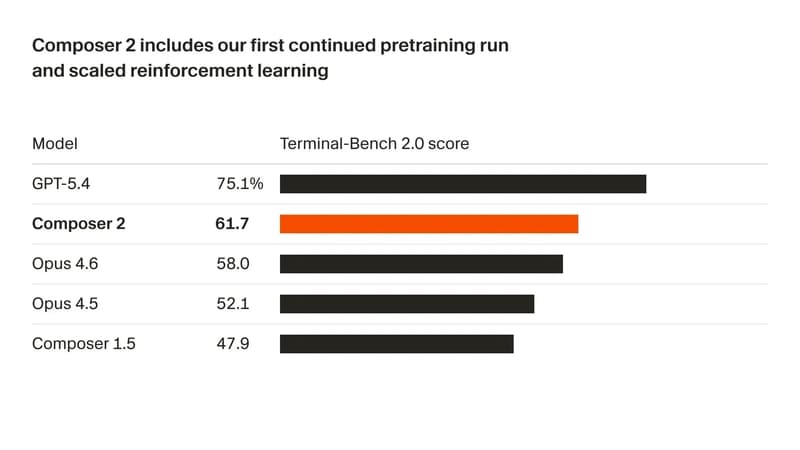
Composer 2: What is new and Compares with Claude Opus 4.6 & GPT-5.4
Dev.to
How UCP Breaks Your E-Commerce Tracking Stack: A Platform-by-Platform Analysis
Dev.to
AI Text Analyzer vs Asking Friends: Which Gives Better Perspective?
Dev.to
[D] Cathie wood claims ai productivity wave is starting, data shows 43% of ceos save 8+ hours weekly
Reddit r/MachineLearning
Microsoft hires top AI researchers from Allen Institute for AI for Suleyman's Superintelligence team
THE DECODER


