
Conservative quantum offline model-based optimization
arXiv stat.ML / 5/6/2026
💬 OpinionModels & Research
Key Points
- Offline model-based optimization (MBO) seeks to optimize a black-box objective using only a fixed dataset, without active experimentation to gather new samples.
- The paper builds on quantum extremal learning (QEL), which uses variational quantum circuits to learn surrogate models from limited data.
- A key issue with predictive surrogates is harmful extrapolation in regions not covered by training data, which can cause selection of unrealistically optimistic candidates.
- To address this, the authors integrate QEL with conservative objective models (COM), a regularization approach that produces cautious predictions for out-of-distribution inputs, yielding the COM-QEL hybrid algorithm.
- Experiments on benchmark offline optimization tasks show COM-QEL finds solutions with higher true objective values than the original QEL, supporting its effectiveness for offline design.
Related Articles
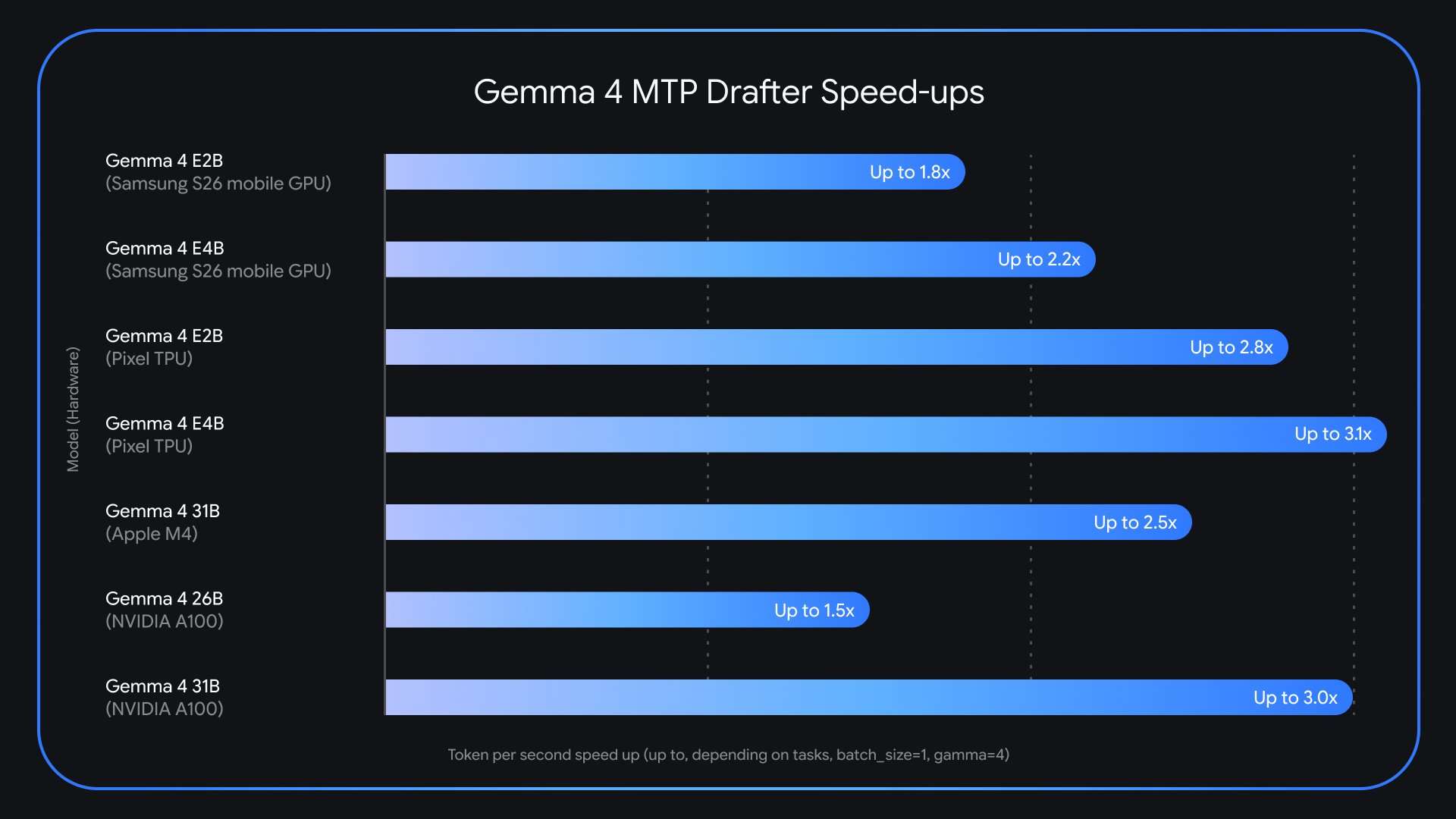
Google AI Releases Multi-Token Prediction (MTP) Drafters for Gemma 4: Delivering Up to 3x Faster Inference Without Quality Loss
MarkTechPost
Solidity LM surpasses Opus
Reddit r/LocalLLaMA

Quality comparison between Qwen 3.6 27B quantizations (BF16, Q8_0, Q6_K, Q5_K_XL, Q4_K_XL, IQ4_XS, IQ3_XXS,...)
Reddit r/LocalLLaMA

We measured the real cost of running a GPT-5.4 chatbot on live websites
Reddit r/artificial

AI ecosystems in China and US grow apart amid tech war
SCMP Tech


