
Decoding Functional Networks for Visual Categories via GNNs
arXiv cs.CV / 4/1/2026
📰 NewsIdeas & Deep AnalysisModels & Research
Key Points
- The paper studies how large-scale brain functional networks encode visual categories by using parcel-level graphs built from 7T fMRI data from the Natural Scenes Dataset.
- It trains a signed Graph Neural Network with positive and negative interaction modeling, an edge-masking mechanism for sparsity, and class-specific saliency to interpret what connectivity patterns matter.
- The approach successfully decodes category-specific functional connectivity states for categories such as sports, food, and vehicles.
- Results highlight reproducible subnetworks that align with ventral and dorsal visual pathways, suggesting the learned representations are biologically meaningful.
- Overall, the work links machine-learning methods with neuroscience by moving from voxel-level category selectivity toward a connectivity-based view of visual processing.
Related Articles

Show HN: 1-Bit Bonsai, the First Commercially Viable 1-Bit LLMs
Dev.to

I Built an AI Agent That Can Write Its Own Tools When It Gets Stuck
Dev.to

Agent Self-Discovery: How AI Agents Find Their Own Wallets
Dev.to
[P] Federated Adversarial Learning
Reddit r/MachineLearning
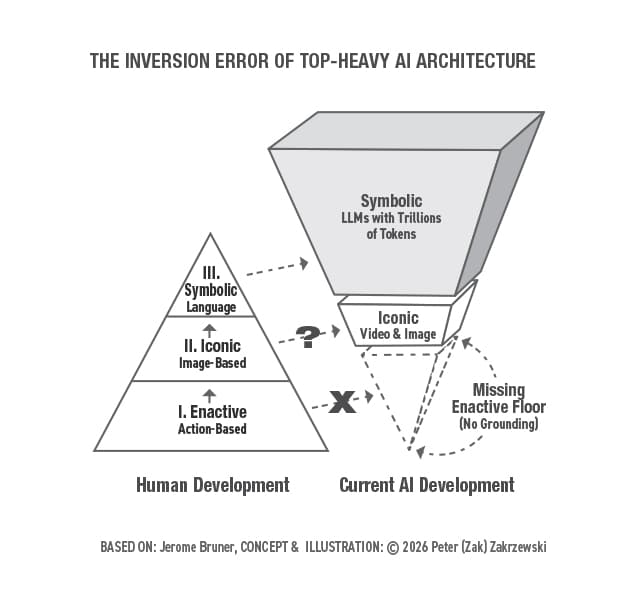
The Inversion Error: Why Safe AGI Requires an Enactive Floor and State-Space Reversibility
Towards Data Science


