
Semantic Richness or Geometric Reasoning? The Fragility of VLM's Visual Invariance
arXiv cs.CV / 4/3/2026
💬 OpinionIdeas & Deep AnalysisModels & Research
Key Points
- The paper tests state-of-the-art Vision-Language Models (VLMs) and finds they often fail to maintain spatial invariance/equivariance under simple geometric transforms like rotation, scaling, and identity changes.
- The reported failures are especially pronounced when semantic cues are sparse (e.g., symbolic sketches and abstract art), where the models’ performance drops sharply.
- The study evaluates multiple visual domains and shows the problem is systematic rather than isolated to a single dataset or model, indicating a gap between semantic understanding and geometric/spatial reasoning.
- Results are consistent across different architectures, model sizes, and prompting strategies, suggesting the weakness is fundamental to current VLM designs.
- The authors conclude that future multimodal systems need stronger geometric grounding to reliably determine object identity under transformation.
Related Articles

90000 Tech Workers Got Fired This Year and Everyone Is Blaming AI but Thats Not the Whole Story
Dev.to

Microsoft’s $10 Billion Japan Bet Shows the Next AI Battleground Is National Infrastructure
Dev.to
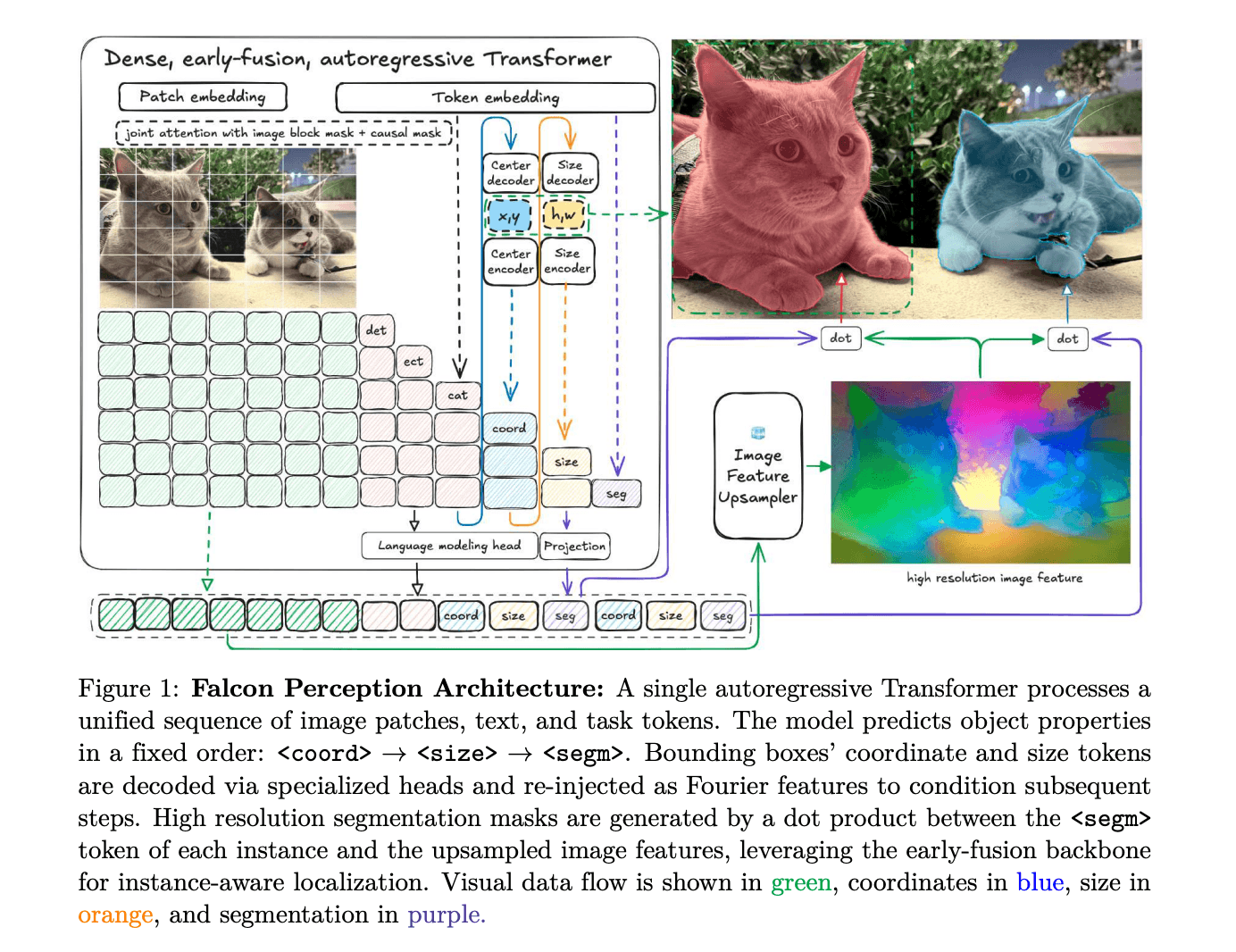
TII Releases Falcon Perception: A 0.6B-Parameter Early-Fusion Transformer for Open-Vocabulary Grounding and Segmentation from Natural Language Prompts
MarkTechPost

The house asked me a question
Dev.to

Precision Clip Selection: How AI Suggests Your In and Out Points
Dev.to


