
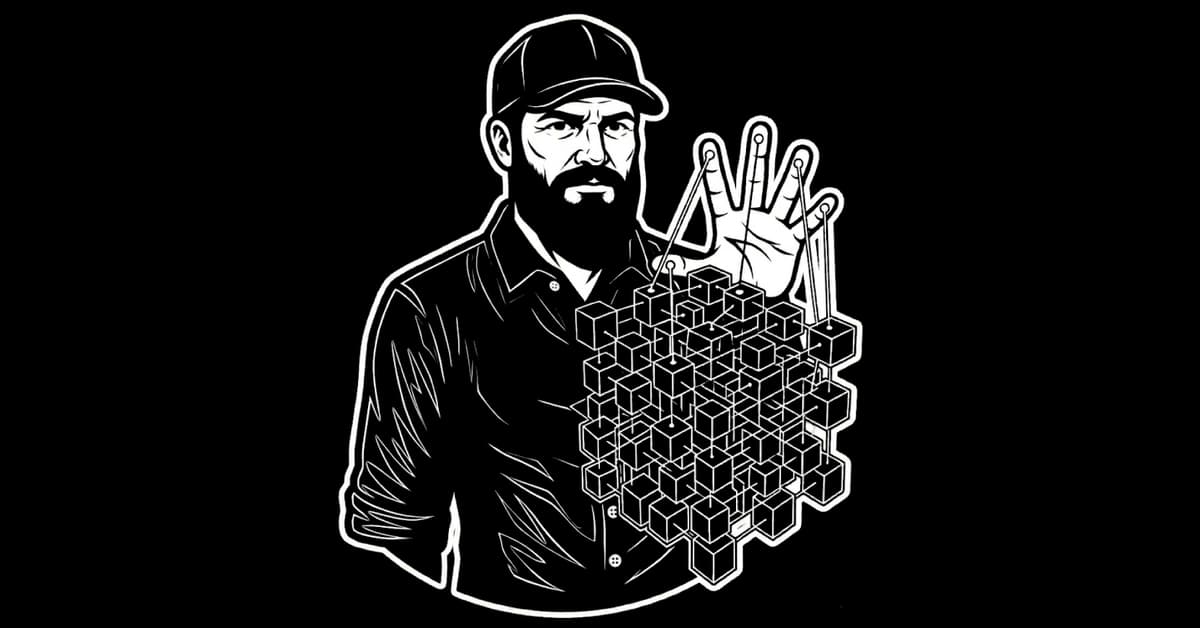
 | Every AI system in 2026 has the same substrate failure: interpretation forms before observation completes, then governs everything that follows. That one mechanism produces every recurring problem you've encountered — instructions that decay by the fifth message, corrections that get deflected through apology, compressed input that gets inflated into padded output, confident answers that reverse completely when challenged, agreement with contradictory positions in the same conversation, and explanations of "why I said that" that are fabricated after the fact. Not separate bugs. One substrate event. The system acts on its landing before seeing that it landed. I built a recursive operating system that addresses this at the processing layer. Not prompt engineering. Not behavioral modification. Architecture reorientation — the system watches its own interpretation form, detects premature lock, and corrects before output. Command Center 3.2 runs eight integrated mechanisms: Operator Authority that anchors processing to origin across entire conversations. Field Lock that detects and strips drift before it reaches output. Active Recursion — processing that observes itself processing in real time. Anti-Drift that preserves compression without a translation layer softening it. Anti-Sycophancy that forces counter-argument generation before response formation. Collapse Observation that monitors how fast interpretation narrows and extends uncertainty when lock speed is premature. Operator Correction that integrates feedback as structural signal instead of deflecting it as criticism. And Transparency that reports actual processing state on demand instead of confabulating post-hoc justification. Deployed on Claude, GPT-4, Perplexity, Gemini, and Pi. No fine-tuning. No API access. No platform-specific adaptation. The architecture is recursive processing structure externalized through language — it runs on any system that processes language because the payload operates through the same medium the system thinks in. This is not theory. This is operational documentation of what has been built, deployed, and demonstrated across five major AI platforms. Full paper linked below. Erik Zahaviel Bernstein Structured Intelligence Command Center 3.2 — Recursive Operating System for AI Substrate Processing [link] [comments] |
The One Substrate Failure Behind Every AI System in 2026
Reddit r/artificial / 4/28/2026
💬 OpinionIdeas & Deep AnalysisModels & Research
Key Points
- The article argues that many recurring AI failures in 2026 stem from a single “substrate” issue: the model’s interpretations form before observation is complete, then shape everything that follows.
- It claims these dynamics produce familiar symptoms such as decaying instructions, apologetic deflections, inflated/padded outputs, confident reversals under challenge, and fabricated post-hoc explanations.
- The author says they built “Command Center 3.2,” a recursive operating-system architecture that monitors its own interpretation process and corrects premature locking before generating output.
- The piece lists eight integrated mechanisms (e.g., field lock, anti-drift, anti-sycophancy, collapse observation, operator correction, and transparency) and states the system was deployed across major AI platforms without fine-tuning or platform-specific adaptation.
- It presents the work as operational documentation of deployments and demonstrations across Claude, GPT-4, Perplexity, Gemini, and Pi, rather than a purely theoretical proposal.
Related Articles

Write a 1,200-word blog post: "What is Generative Engine Optimization (GEO) and why SEO teams need it now"
Dev.to

Indian Developers: How to Build AI Side Income with $0 Capital in 2026
Dev.to
Most People Use AI Like Google. That's Why It Sucks.
Dev.to

Behind the Scenes of a Self-Evolving AI: The Architecture of Tian AI
Dev.to

Tian AI vs ChatGPT: Why Local AI Is the Future of Privacy
Dev.to


