
Graph Convolutional Support Vector Regression for Robust Spatiotemporal Forecasting of Urban Air Pollution
arXiv stat.ML / 5/6/2026
💬 OpinionIdeas & Deep AnalysisModels & Research
Key Points
- The paper addresses the difficulty of urban air pollution forecasting caused by nonlinear, nonstationary, and spatiotemporally dependent pollutant behavior, often worsened by anomalous observations.
- It proposes a Graph Convolutional Support Vector Regression (GCSVR) framework that uses graph convolution to model spatial relationships among monitoring stations and support vector regression to capture nonlinear temporal dynamics.
- The method is designed to be more robust to outliers, and it is evaluated on air-quality datasets from 37 Delhi stations and 18 Mumbai stations, covering both inland and coastal metropolitan conditions.
- Across multiple forecasting horizons, GCSVR improves prediction accuracy versus existing temporal and spatiotemporal benchmarks while keeping performance stable across seasons and outlier-heavy pollution events.
- By integrating conformal prediction, the approach produces calibrated prediction intervals to support uncertainty-aware monitoring and public health decision-making.
Related Articles

Top 10 Free AI Tools for Students in 2026: The Ultimate Study Guide
Dev.to

AI as Your Contingency Co-Pilot: Automating Wedding Day 'What-Ifs'
Dev.to
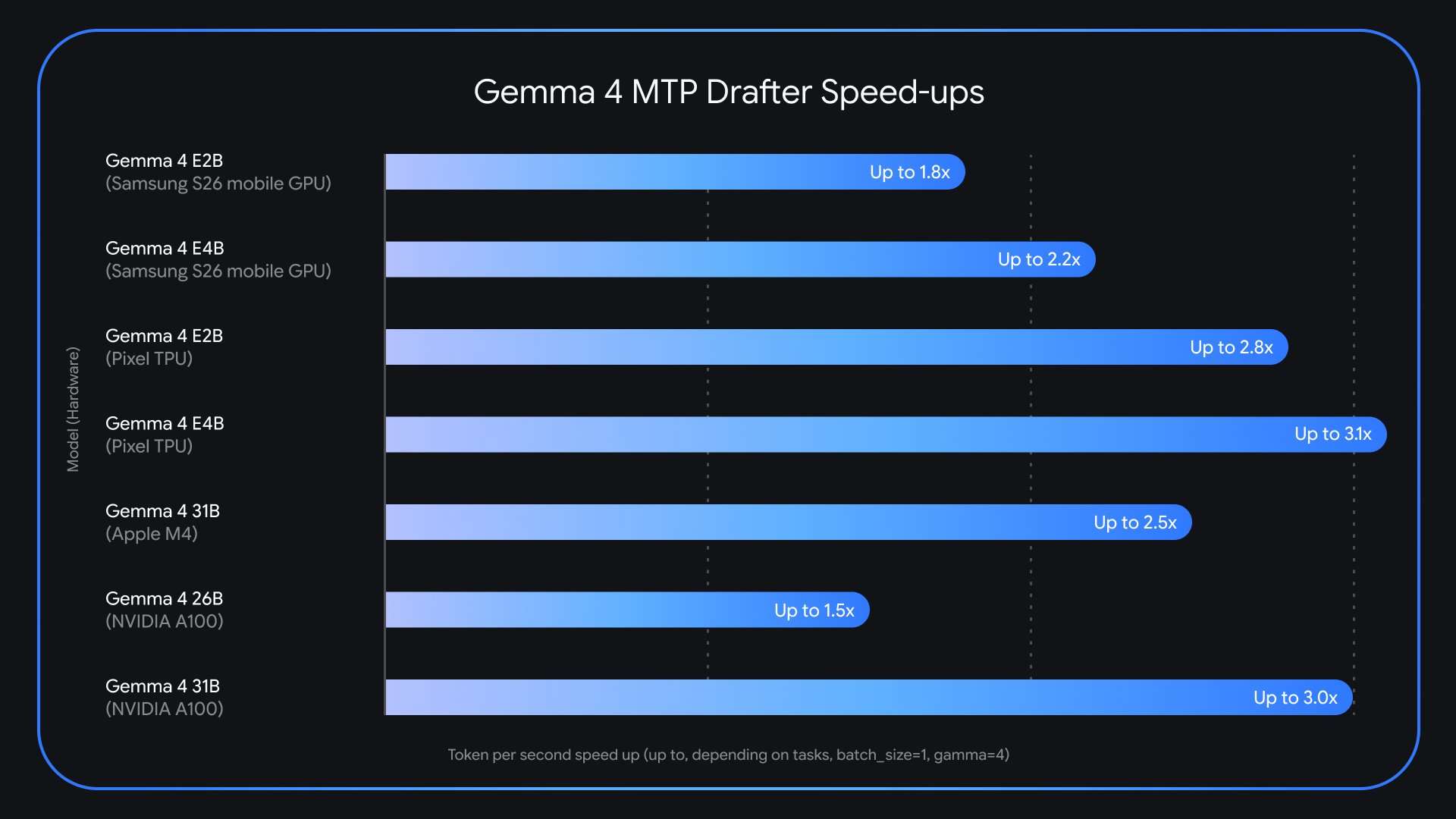
Google AI Releases Multi-Token Prediction (MTP) Drafters for Gemma 4: Delivering Up to 3x Faster Inference Without Quality Loss
MarkTechPost
When Claude Hallucinates in Court: The Latham & Watkins Incident and What It Means for Attorney Liability
MarkTechPost
Solidity LM surpasses Opus
Reddit r/LocalLLaMA


