
Embedding-Only Uplink for Onboard Retrieval Under Shift in Remote Sensing
arXiv cs.CV / 4/7/2026
📰 NewsSignals & Early TrendsIdeas & Deep AnalysisModels & Research
Key Points
- The paper studies an “embedding-only” uplink for onboard remote sensing, where the ground station transmits compact embeddings and metadata instead of raw pixels to avoid downlink bottlenecks.
- It evaluates robustness under explicit remote-sensing distribution shifts, including cross-time, cross-event/location, multi-site cloud shifts (15 sites), and cross-city AOI holdouts.
- Using OlmoEarth embeddings on a multi-task benchmark, the study finds the uplinked embeddings are the key enabler, but the best onboard decision module differs by task.
- Results show kNN-style retrieval is significantly better for cloud classification, while class centroids are much stronger for temporal change detection.
- The authors conclude that once embeddings are available onboard, systems can switch optimal heads per task without extra uplink cost, keeping telemetry under 1 KB per query.
Related Articles

Black Hat Asia
AI Business
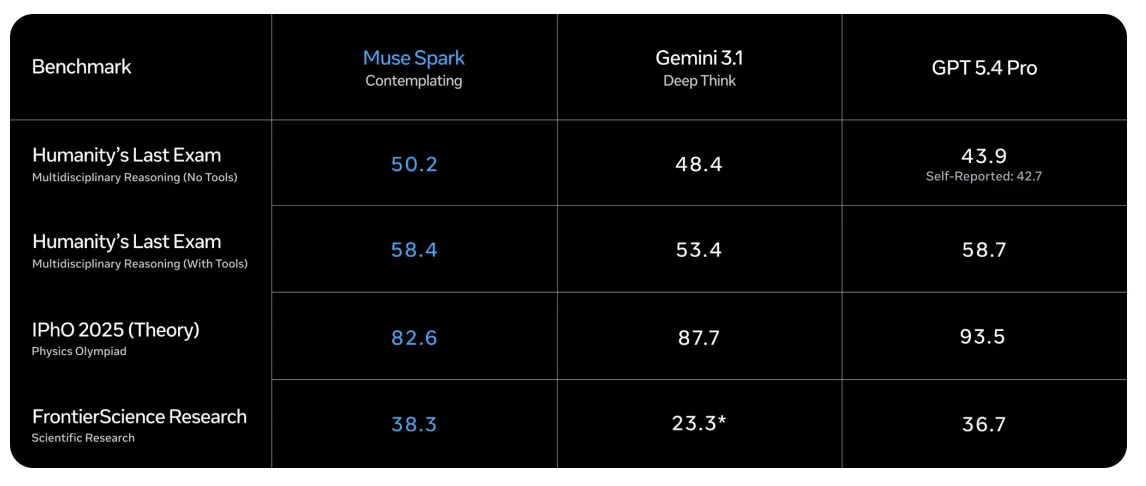
Meta Superintelligence Lab Releases Muse Spark: A Multimodal Reasoning Model With Thought Compression and Parallel Agents
MarkTechPost

Chatbots are great at manipulating people to buy stuff, Princeton boffins find
The Register
I tested and ranked every ai companion app I tried and here's my honest breakdown
Reddit r/artificial

Big Tech firms are accelerating AI investments and integration, while regulators and companies focus on safety and responsible adoption.
Dev.to


