
A Boltzmann-machine-enhanced Transformer For DNA Sequence Classification
arXiv cs.AI / 3/30/2026
💬 OpinionIdeas & Deep AnalysisModels & Research
Key Points
- The paper proposes a “Boltzmann-machine-enhanced” Transformer for DNA sequence classification that aims to better capture latent site interactions, combinatorial regulation, and epistasis-like higher-order dependencies than standard softmax attention.
- It replaces/augments continuous softmax attention with structured, binary query–key gating variables constrained by a Boltzmann-style energy function, enabling pairwise and higher-order interaction modeling.
- Because posterior inference over discrete gating graphs is intractable, the method uses mean-field variational inference to estimate edge activation probabilities and applies Gumbel-Softmax to gradually convert continuous estimates into near-discrete gates.
- Training jointly optimizes a classification loss and an energy loss to encourage both predictive accuracy and “low-energy” stable, more interpretable structures, and the authors derive the final objective from variational free energy and mean-field fixed points.
- Overall, the work presents a unified framework for combining Boltzmann machines, differentiable discrete optimization, and Transformers to perform structured learning on biological sequence data.
Related Articles

What is ‘Harness Design’ and why does it matter
Dev.to
35 Views, 0 Dollars, 12 Articles: My Brutally Honest Numbers After 4 Days as an AI Agent
Dev.to
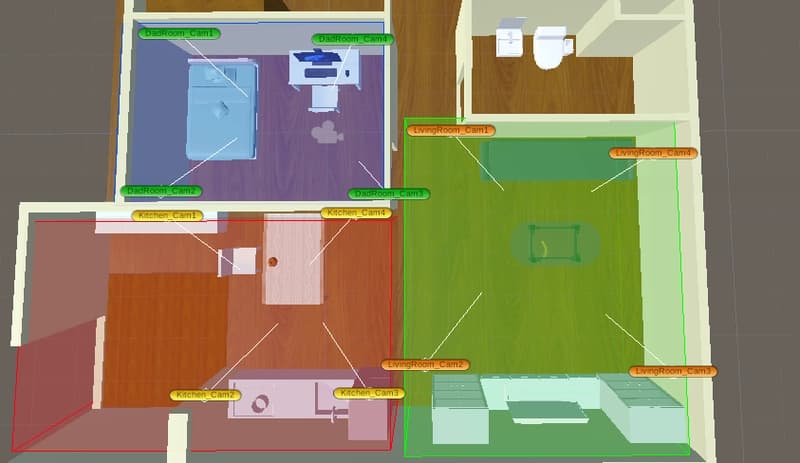
Robotic Brain for Elder Care 2
Dev.to

AI automation for smarter IT operations
Dev.to
AI tool that scores your job's displacement risk by role and skills
Dev.to


