
HintMR: Eliciting Stronger Mathematical Reasoning in Small Language Models
arXiv cs.AI / 4/15/2026
📰 NewsSignals & Early TrendsIdeas & Deep AnalysisModels & Research
Key Points
- HintMR proposes a hint-assisted reasoning framework to improve small language models’ performance on multi-step mathematical problems by guiding them through sequential reasoning steps.
- The system uses a cooperative two-model setup where a separate hint-generating SLM (trained by distillation from a stronger LLM) produces context-aware hints based on the problem statement and the model’s accumulated reasoning history.
- Hints are designed to be localized and stepwise, helping reduce error propagation while avoiding giving away full solutions.
- Experiments on multiple mathematical benchmarks show consistent accuracy improvements over standard prompting, while maintaining the efficiency of small models.
- The paper positions structured collaboration between SLMs—via hint generation plus a reasoning model—as a lightweight mechanism to strengthen mathematical reasoning without increasing model size.
Related Articles

Black Hat Asia
AI Business

The Complete Guide to Better Meeting Productivity with AI Note-Taking
Dev.to

5 Ways Real-Time AI Can Boost Your Sales Call Performance
Dev.to
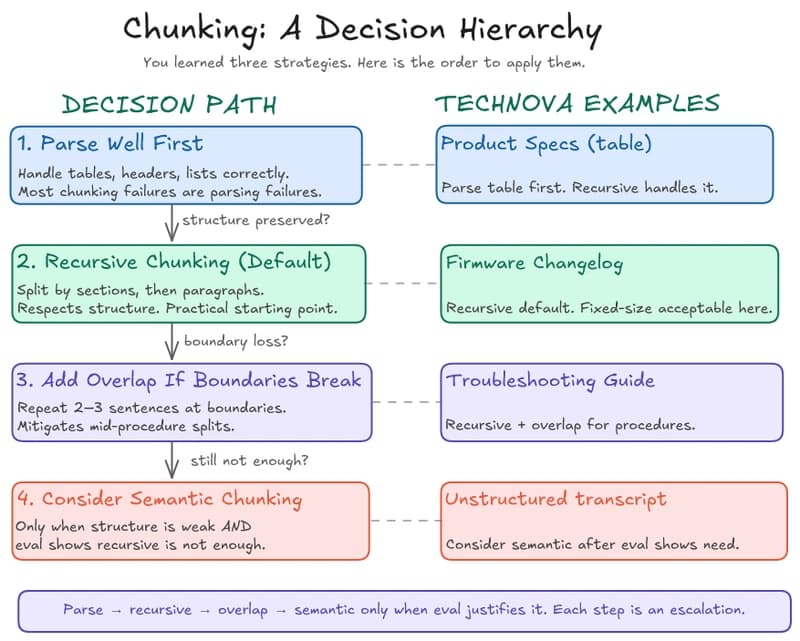
RAG in Practice — Part 4: Chunking, Retrieval, and the Decisions That Break RAG
Dev.to
Why dynamically routing multi-timescale advantages in PPO causes policy collapse (and a simple decoupled fix) [R]
Reddit r/MachineLearning


