
A Deeper Dive into the Irreversibility of PolyProtect: Making Protected Face Templates Harder to Invert
arXiv cs.CV / 5/6/2026
📰 NewsDeveloper Stack & InfrastructureIdeas & Deep AnalysisModels & Research
Key Points
- The paper deepens the analysis of PolyProtect’s “irreversibility” for face biometric template protection by studying how hard the protected templates are to invert back into original face embeddings.
- It finds that PolyProtected templates are easier to invert when attackers use a numerical solver based on cosine distance rather than the Euclidean distance approach used in earlier PolyProtect work.
- To strengthen irreversibility, the authors introduce a key selection algorithm that chooses the PolyProtect polynomial’s coefficients and exponents to make inversion harder than with purely random keys.
- Experiments show the algorithm produces templates that are significantly more difficult to invert and helps harmonize irreversibility across different overlap settings, improving control over the irreversibility–accuracy trade-off.
- The study also shows accuracy in the PolyProtect domain depends on the value range of embedding elements, and that embedding normalization before applying PolyProtect mitigates this issue, with reproducibility via open-source code.
Related Articles

Top 10 Free AI Tools for Students in 2026: The Ultimate Study Guide
Dev.to

SIFS (SIFS Is Fast Search) - local code search for coding agents
Dev.to

AI as Your Contingency Co-Pilot: Automating Wedding Day 'What-Ifs'
Dev.to

BizNode's semantic memory (Qdrant) makes your bot smarter over time — it remembers past conversations and answers...
Dev.to
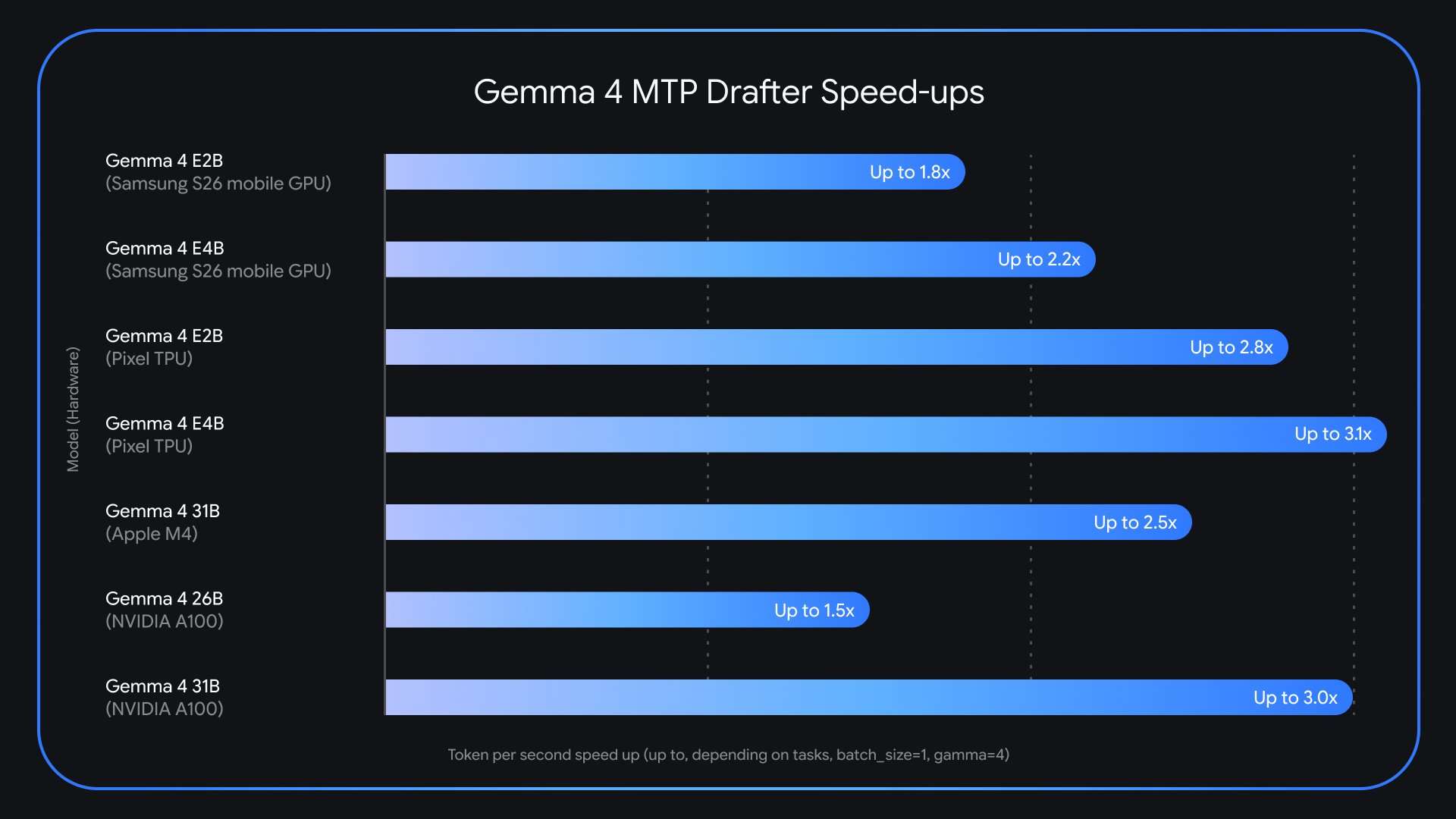
Google AI Releases Multi-Token Prediction (MTP) Drafters for Gemma 4: Delivering Up to 3x Faster Inference Without Quality Loss
MarkTechPost


