
Modality-Agnostic Prompt Learning for Multi-Modal Camouflaged Object Detection
arXiv cs.CV / 4/15/2026
📰 NewsSignals & Early TrendsIdeas & Deep AnalysisModels & Research
Key Points
- The paper introduces modality-agnostic multi-modal prompt learning for camouflaged object detection (COD), targeting limitations of modality-specific architectures and fusion designs.
- It proposes a framework that generates unified prompts for the Segment Anything Model (SAM) using interactions between a content domain and a prompt (knowledge) domain, enabling parameter-efficient adaptation to arbitrary auxiliary modalities.
- A lightweight Mask Refine Module is added to improve coarse segmentation by injecting fine-grained prompt cues for sharper, more accurate camouflaged object boundaries.
- Experiments across RGB-Depth, RGB-Thermal, and RGB-Polarization benchmarks show improved performance and stronger cross-modal generalization.
- The work positions SAM prompt-based adaptation as a scalable route to incorporate additional modalities without redesigning the core model for each modality type.
Related Articles

Black Hat Asia
AI Business

The Complete Guide to Better Meeting Productivity with AI Note-Taking
Dev.to

5 Ways Real-Time AI Can Boost Your Sales Call Performance
Dev.to
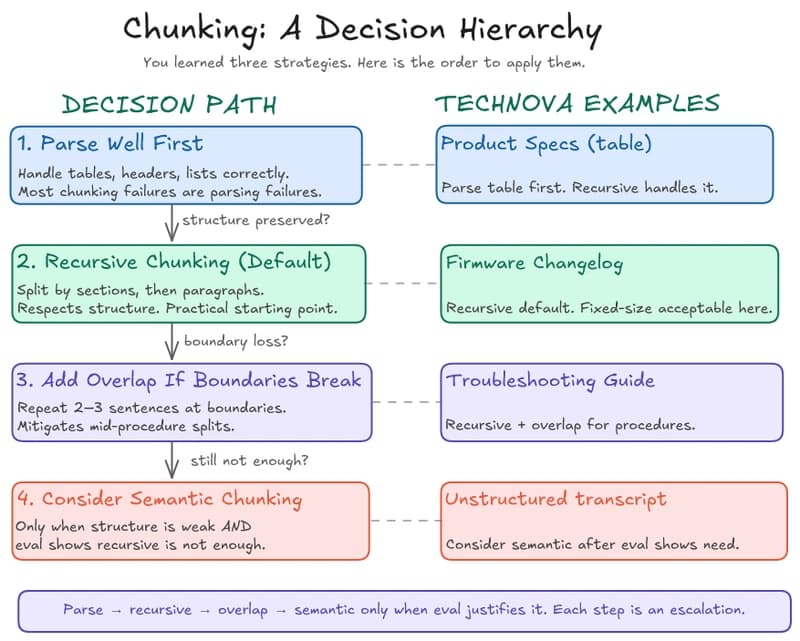
RAG in Practice — Part 4: Chunking, Retrieval, and the Decisions That Break RAG
Dev.to
Why dynamically routing multi-timescale advantages in PPO causes policy collapse (and a simple decoupled fix) [R]
Reddit r/MachineLearning


