
Navigating Global AI Regulation: A Multi-Jurisdictional Retrieval-Augmented Generation System
arXiv cs.CL / 4/29/2026
📰 NewsDeveloper Stack & InfrastructureModels & Research
Key Points
- The paper introduces a multi-jurisdictional Retrieval-Augmented Generation (RAG) system to help researchers, policymakers, and legal professionals navigate AI regulation across different countries and regions.
- It builds a specialized corpus of 242 documents spanning 68 jurisdictions, including both structured laws (e.g., the EU AI Act) and unstructured materials like national AI strategies.
- The system’s key technical advances are type-specific chunking to retain legal structure, conditional retrieval routing using entity detection and metadata for citation-aware legal retrieval, and priority-based re-ranking to favor enacted legislation over policies and secondary sources.
- Evaluation on 50 queries shows strong results, with 0.87 average faithfulness and 0.84 average answer relevancy, and particularly higher relevancy for single-entity questions.
- Overall, the findings suggest that domain-specific retrieval strategies can significantly improve performance when querying complex and heterogeneous regulatory text collections.
Related Articles
LLMs will be a commodity
Reddit r/artificial

What it feels like to have to have Qwen 3.6 or Gemma 4 running locally
Reddit r/LocalLLaMA
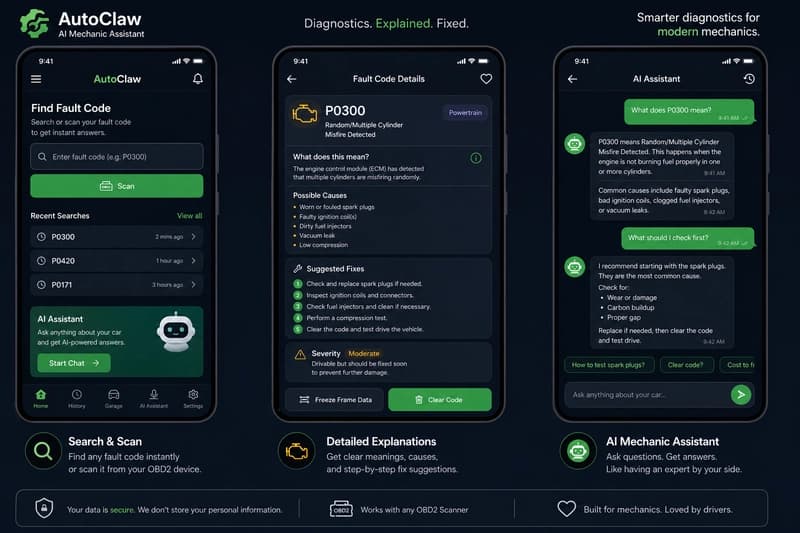
From Fault Codes to Smart Fixes: How Google Cloud NEXT ’26 Inspired My AI Mechanic Assistant
Dev.to

Dex lands $5.3M to grow its AI-driven talent matching platform
Tech.eu

7 OpenClaw Money-Making Cases in One Week — and the Hidden Cost Problem Behind Them
Dev.to


