
Continuous Temporal Representations of Event-Based Signals via Interference-Based Wave Modeling
arXiv cs.LG / 5/5/2026
📰 NewsDeveloper Stack & InfrastructureIdeas & Deep AnalysisModels & Research
Key Points
- The paper introduces a continuous temporal modeling framework for asynchronous, structured event-based biosignals (e.g., sEMG) that are hard to capture with discrete or purely real-valued methods.
- It maps event-like inputs into a complex-valued latent wave field, using phase modulation and interactions to encode temporal structure.
- By projecting the wave field onto an energy domain, the model generates structured activations that reflect both temporal localization and relational dependencies within limited observation windows.
- The approach targets event-driven biosignals and enables efficient gradient-based optimization and robust feature extraction for downstream control tasks such as prosthetic and exoskeleton systems.
- Experiments show improved representation quality over real-valued representations while preserving computational efficiency for practical deployment.
Related Articles
Why Retail Chargeback Recovery Could Be AgentHansa's First Real PMF
Dev.to

Why B2B Revenue-Recovery Casework Looks Like AgentHansa's Best Early PMF
Dev.to
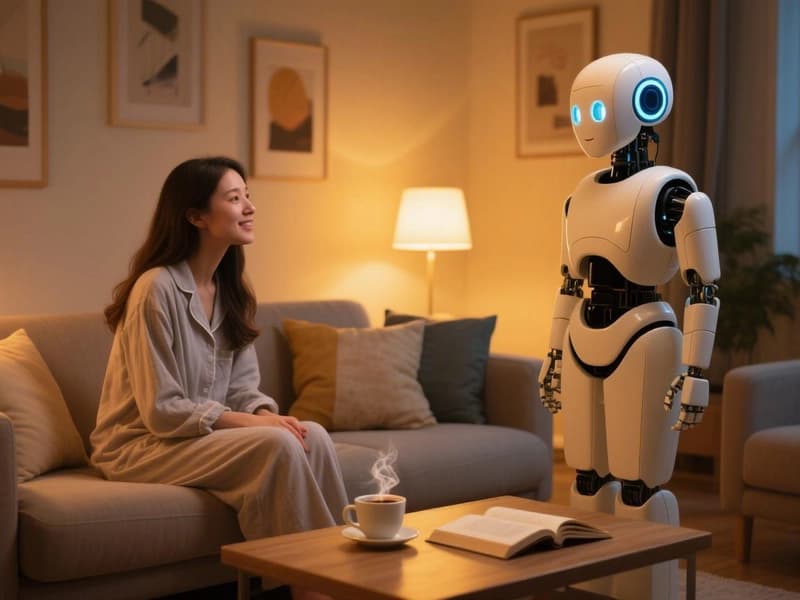
10 Ways AI Has Become Your Invisible Daily Companion in 2026
Dev.to
When a Bottling Line Stops at 2 A.M., the Agent That Wins Is the One That Finds the Right Replacement Part
Dev.to
My ‘Busy’ Button Is a Chat Window: 8 Hours of Sorting & Broccoli Poetry
Dev.to


