
Mine-JEPA: In-Domain Self-Supervised Learning for Mine-Like Object Classification in Side-Scan Sonar
arXiv cs.CV / 4/2/2026
📰 NewsSignals & Early TrendsIdeas & Deep AnalysisModels & Research
Key Points
- The paper introduces Mine-JEPA, described as the first in-domain self-supervised learning pipeline specifically for side-scan sonar (SSS) mine classification under extreme data scarcity and a strong domain gap versus natural images.
- Using SIGReg regularization-based SSL loss and only 1,170 unlabeled sonar images, Mine-JEPA achieves an F1 score of 0.935 in the binary mine vs. non-mine task, outperforming a fine-tuned DINOv3 baseline.
- For a 3-class mine-like object classification task, Mine-JEPA reaches 0.820 with synthetic data augmentation and again surpasses fine-tuned DINOv3.
- The study finds that applying in-domain SSL to an already strong foundation model can significantly degrade performance (by about 10–13 percentage points), implying that more pretraining or adaptation is not always beneficial.
- The method also demonstrates parameter efficiency: with a compact ViT-Tiny backbone, Mine-JEPA offers competitive results using about 4x fewer parameters than DINOv3, supporting the case for tailored in-domain SSL over larger models in sonar imagery.
Related Articles

Black Hat Asia
AI Business
v5.5.0
Transformers(HuggingFace)Releases
Bonsai (PrismML's 1 bit version of Qwen3 8B 4B 1.7B) was not an aprils fools joke
Reddit r/LocalLLaMA

Big Tech firms are accelerating AI investments and integration, while regulators and companies focus on safety and responsible adoption.
Dev.to
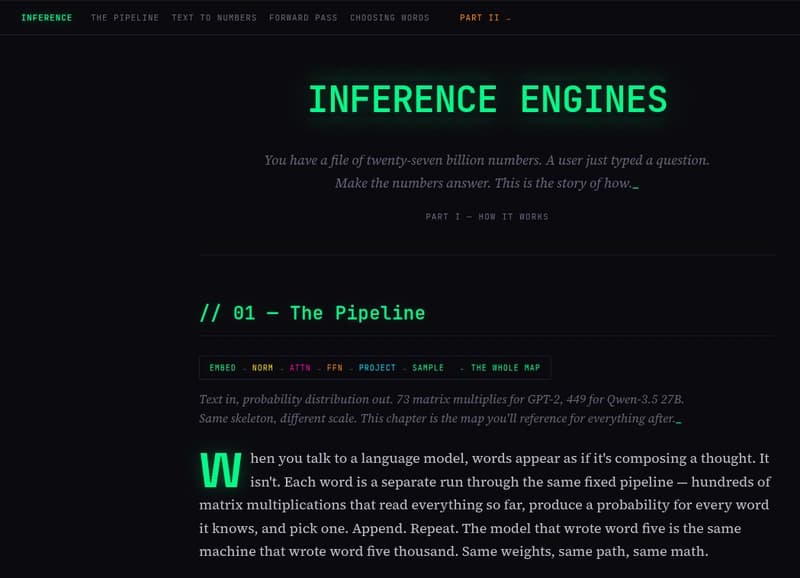
Inference Engines - A visual deep dive into the layers of an LLM
Dev.to


