
Rethinking Temporal Consistency in Video Object-Centric Learning: From Prediction to Correspondence
arXiv cs.CV / 5/6/2026
📰 NewsModels & Research
Key Points
- Traditional video object-centric learning enforces temporal consistency by training learned dynamics modules that predict future object slots, but the work argues these predictors are effectively costly approximations of discrete correspondence.
- The paper shows that modern self-supervised vision backbones already provide instance-discriminative features, allowing temporal prediction to be unnecessary for identity consistency.
- It proposes Grounded Correspondence, which maintains frame-to-frame identity using deterministic bipartite matching (Hungarian matching) over slot representations instead of learned transition functions.
- Slots are initialized from salient regions using frozen backbone features, and the method uses zero learnable parameters for temporal modeling while still achieving competitive results on MOVi-D, MOVi-E, and YouTube-VIS.
Related Articles
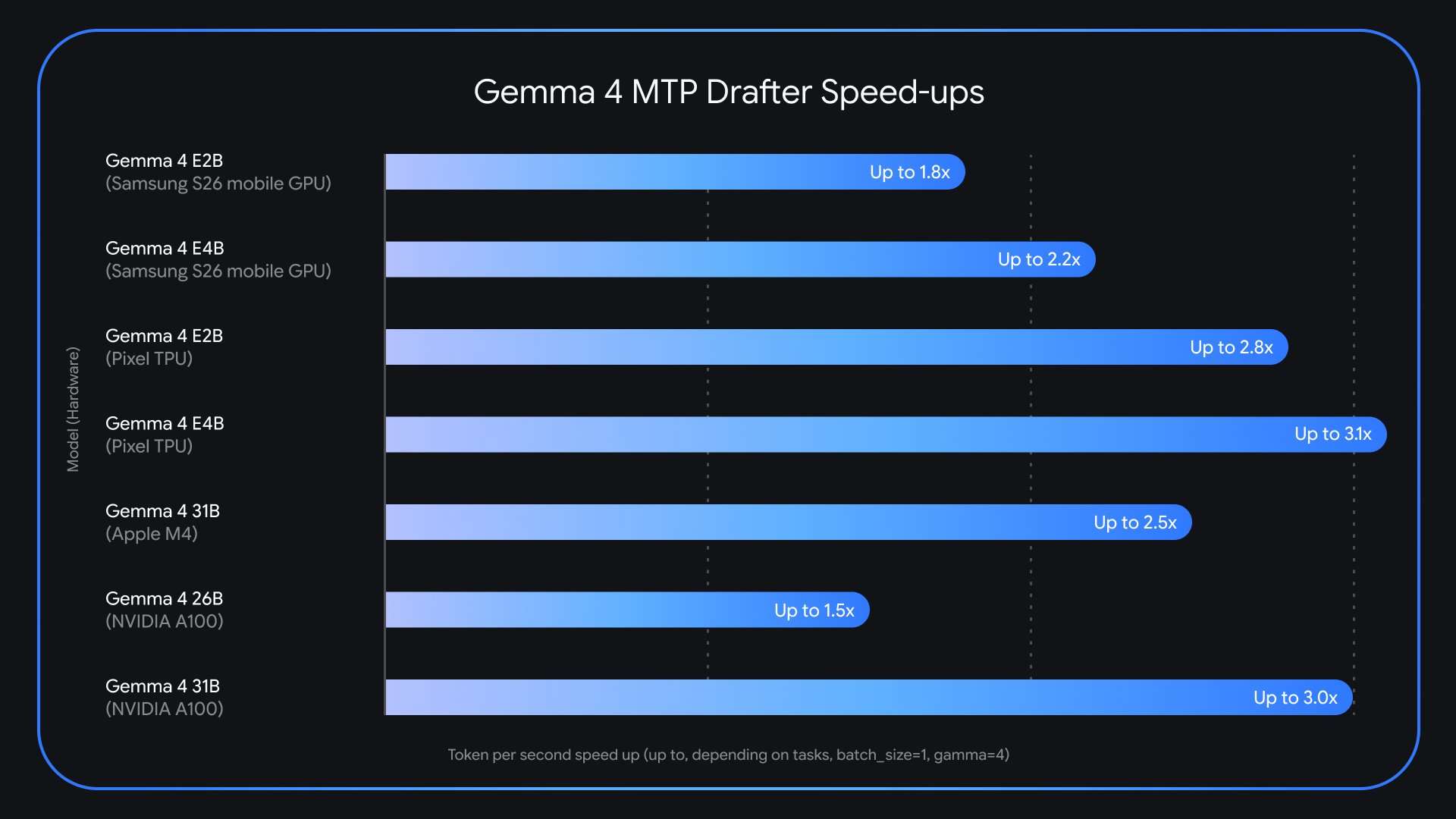
Google AI Releases Multi-Token Prediction (MTP) Drafters for Gemma 4: Delivering Up to 3x Faster Inference Without Quality Loss
MarkTechPost
Solidity LM surpasses Opus
Reddit r/LocalLLaMA

Quality comparison between Qwen 3.6 27B quantizations (BF16, Q8_0, Q6_K, Q5_K_XL, Q4_K_XL, IQ4_XS, IQ3_XXS,...)
Reddit r/LocalLLaMA

We measured the real cost of running a GPT-5.4 chatbot on live websites
Reddit r/artificial

AI ecosystems in China and US grow apart amid tech war
SCMP Tech


