
FeaXDrive: Feasibility-aware Trajectory-Centric Diffusion Planning for End-to-End Autonomous Driving
arXiv cs.RO / 4/15/2026
📰 NewsSignals & Early TrendsIdeas & Deep AnalysisModels & Research
Key Points
- The paper argues that current end-to-end diffusion-based trajectory planners often fail to adequately enforce physical feasibility, leading to geometric irregularities, kinematic constraint violations, and drivable-area deviations.
- It introduces FeaXDrive, a feasibility-aware trajectory-centric diffusion planning approach that models the clean trajectory as the main object during the diffusion process.
- FeaXDrive improves trajectory feasibility via adaptive curvature-constrained training, drivable-area guidance during reverse sampling, and feasibility-aware GRPO post-training to balance performance with feasibility.
- Experiments on the NAVSIM benchmark indicate strong closed-loop planning performance alongside substantially improved trajectory-space feasibility compared with prior diffusion planning formulations.
- The authors position FeaXDrive as evidence that explicitly modeling feasibility in trajectory space is important for making diffusion planners more reliable and physically grounded.
Related Articles

Black Hat Asia
AI Business

The Complete Guide to Better Meeting Productivity with AI Note-Taking
Dev.to

5 Ways Real-Time AI Can Boost Your Sales Call Performance
Dev.to
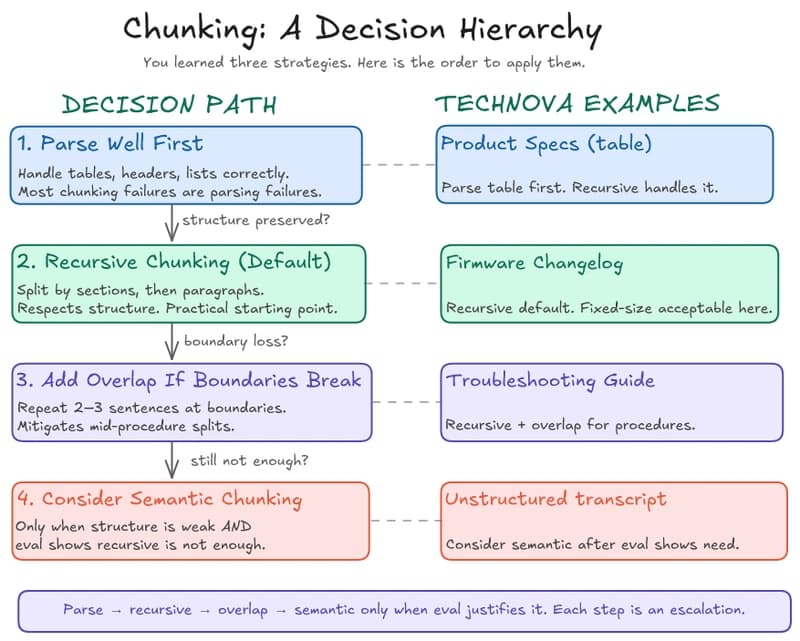
RAG in Practice — Part 4: Chunking, Retrieval, and the Decisions That Break RAG
Dev.to
Why dynamically routing multi-timescale advantages in PPO causes policy collapse (and a simple decoupled fix) [R]
Reddit r/MachineLearning


