
Towards the AI Historian: Agentic Information Extraction from Primary Sources
arXiv cs.AI / 4/7/2026
📰 NewsSignals & Early TrendsTools & Practical UsageModels & Research
Key Points
- The paper introduces Chronos, an “AI Historian” under development aimed at enabling historians to perform agentic information extraction from primary sources where current AI solutions are limited.
- The first Chronos module supports converting image scans of primary sources into structured data via natural-language interactions, rather than relying on a single fixed VLM-powered extraction pipeline.
- Chronos is designed to let historians adapt extraction workflows to heterogeneous document corpora, evaluate model performance on specific tasks, and iteratively refine workflows through interaction with the agent.
- The module is described as open-source and positioned for historians to use on their own collections, supporting practical experimentation and validation.
- Overall, the work frames historical research as an area needing tailor-made AI tooling and proposes an agentic, human-in-the-loop approach to extraction and workflow control.
Related Articles

Black Hat USA
AI Business

Black Hat Asia
AI Business
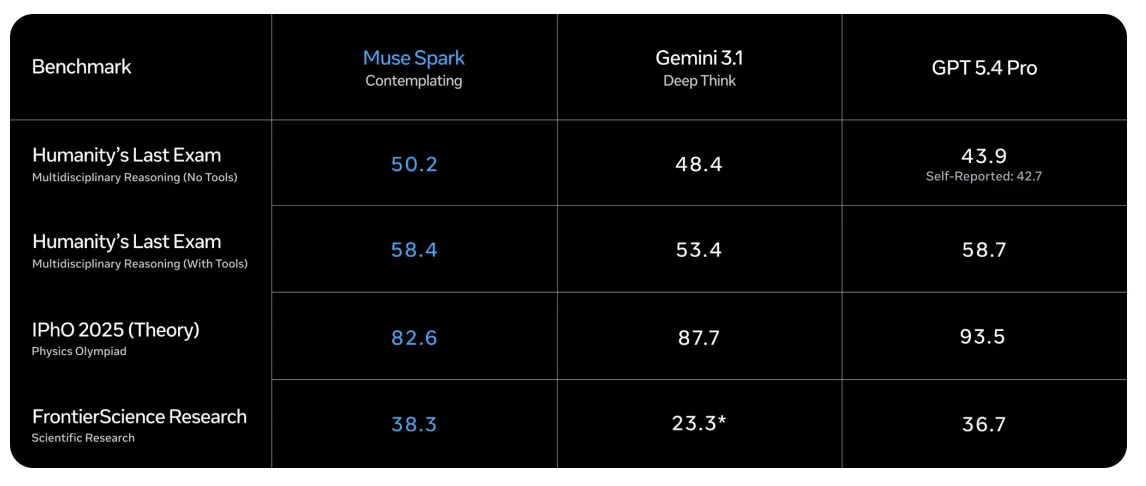
Meta Superintelligence Lab Releases Muse Spark: A Multimodal Reasoning Model With Thought Compression and Parallel Agents
MarkTechPost

Chatbots are great at manipulating people to buy stuff, Princeton boffins find
The Register
I tested and ranked every ai companion app I tried and here's my honest breakdown
Reddit r/artificial


